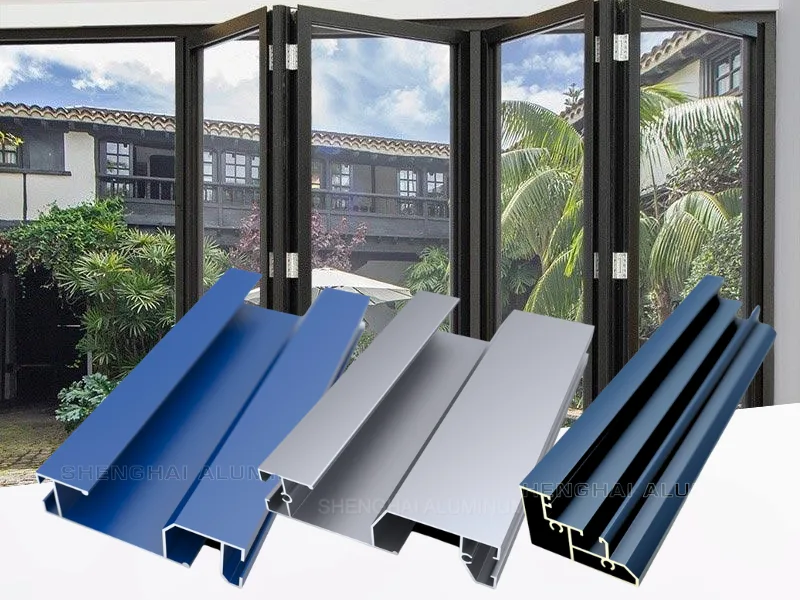
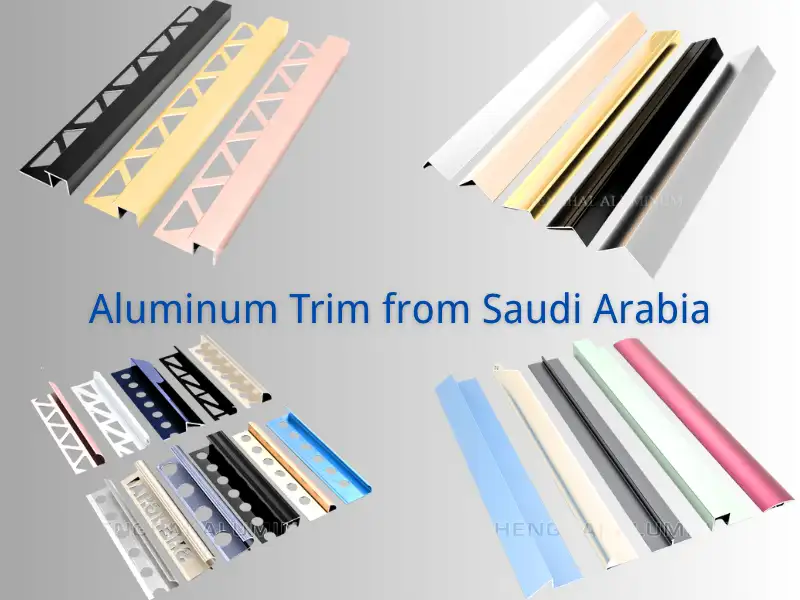
Our full-range SASO & SABER certified aluminum trim is custom-engineered for Saudi Arabia’s extreme climate. Made of high-purity 6063-T5/T6 aluminum alloy with Qualicoat Class 2 super weather-resistant coating, all products pass 3000h QUV UV aging test and 1000h+ neutral salt spray test, perfectly adapting to 50℃ high temperature, intense UV and coastal salt spray environments. This collection covers tile edge trim, L-shape corner trim, U-channel strips, T-type trim and custom profiles, ideal for all residential and commercial construction projects across Saudi Arabia.This collection includes tile edge trim, L-shape corner trim, U-channel decorative strips, T-type trim and custom profiles, ideal for residential villas, commercial buildings, high-rise facades, hotels and tile decoration projects across Saudi Arabia, fully compliant with SASO & SABER local regulations.
I. What Are Saudi Industry Standards?
In Saudi Arabia, “Saudi Industry Standards” does not refer to a single regulation but rather a comprehensive set of technical guidelines and compliance systems established and enforced by SASO (Saudi Standards, Metrology and Quality Organization).
- It serves as a legally mandated “entry permit”: All aluminum trim exported to Saudi Arabia must comply with the technical regulations set by SASO. Without meeting these standards, your aluminum trim will not clear customs.
- It serves as an “ID card” for online regulation: These standards are now integrated into the SABER system. Products must be registered in the system and obtain a Certificate of Conformity (CoC) to prove that your aluminum meets the required standards for composition, strength, and fire resistance.
- It serves as a “safety lock” against extreme climates: This standard sets specific thresholds tailored to Saudi Arabia’s high-temperature (50°C) and high-UV environments. Compliance ensures your trim will not warp, peel, or fade under the scorching sun and will have a sufficiently long service life.
II. What aspects does the Saudi Industrial Standard SASO test?
In the Saudi aluminum trim procurement sector, SASO is the universally recognized quality standard and is consistently endorsed by procurement managers. Saudi Arabia is renowned for its stringent quality requirements; aluminum trim must pass SASO certification to enter markets across Saudi cities, particularly in Riyadh, Dammam, Jubail, and NEOM. For aluminum trim, compliance with SASO certification and Ministry of Industry standards involves the following five criteria:
- Dimensional Stability: This focuses on testing the deformation of aluminum profiles under extreme temperature fluctuations. It is a key indicator for preventing “warping” and “fracturing” in large-span structures.
- Surface Adhesion: This evaluates the bond strength between the coating and the aluminum substrate. In Saudi Arabia’s environment, where thermal expansion and contraction occur frequently, substandard adhesion can cause the paint to peel off in scales.
- Extreme Weather Resistance: Designed for Saudi Arabia’s intense ultraviolet (UV) environment, this test evaluates the profiles’ color retention and resistance to chalking, ensuring no fading for 20 years.
- Salt Spray Test: For coastal projects such as those in Jeddah, this test simulates high-salt, high-humidity environments to evaluate the material’s corrosion resistance for over 1,000 hours.
- Impact Strength: Simulates mechanical impacts during installation to ensure the profiles maintain their toughness under high-temperature, dry conditions and do not suffer brittle fracture.
III. Why Are Aluminum Trim Profiles Virtually Unaffected by Expansion at 50°C?
Under the high temperatures of Riyadh, virtually all building materials undergo thermal expansion and contraction. Saudi Industrial Standards favor aluminum trim profiles because aluminum’s behavior under extreme heat is predictable and controllable.
1. Aluminum has a low coefficient of thermal expansion
Aluminum’s coefficient of thermal expansion is approximately 23 × 10⁻⁶/K. This means that when the ambient temperature rises from 20°C to 50°C, each meter of aluminum expands by only about 0.69 mm.
Why is this important? This expansion is, in physical terms, a minute and “uniform expansion.” As long as expansion joints are provided during installation, the aluminum trim will not warp or fracture due to internal stress, so the expansion of the aluminum trim has virtually no impact.
2. High-Temperature-Resistant Crystal Structure and Cross-Section Design
Differences in materials and processing methods can affect the high-temperature resistance and strength of the trim itself. The 6063-T5/T6 alloy used by SH-EXTRUSION undergoes precise aging treatment. This heat treatment process strengthens the internal crystal structure of the aluminum, giving it higher tensile strength and structural hardness.
- 6063 Alloy: Provides excellent machinability, allowing us to design complex internal ribs.
- Cross-Section Design: A scientifically optimized cross-section design effectively disperses thermal stress, ensuring that decorative strips several meters long maintain their straightness even under intense sunlight, without developing a visual “wavy” appearance.
IV. Why Does the Surface Coating on Aluminum Decorative Strips Not Peel Under 50°C UV Exposure?
Under the intense Saudi sun, the surface temperature of aluminum decorative strips far exceeds the ambient temperature. If the surface treatment process cannot withstand the high temperatures common in Saudi Arabia, UV radiation and heat will break down the chemical bonds of the coating molecules within a few months, leading to fading and chalking, which severely affects both appearance and service life.
- UV Testing (QUV Test): Decorative strips compliant with Saudi standards must pass the QUV accelerated UV aging test. This test simulates Saudi Arabia’s environment—high temperatures and high UV exposure—to observe whether peeling occurs.
- Cross-Cut Adhesion Test: This is the key to assessing the risk of “peeling.” In a simulated test at 50°C, a grid pattern is cut into the coating to ensure that even with slight thermal expansion of the metal, the coating remains firmly bonded to the substrate like a “second skin.”
Effective surface treatments ensure no peeling:
- Anodizing: The preferred choice and one of the most stable and commonly used surface treatments for aluminum trim in Saudi Arabia, it remains stable even under UV exposure at 50°C.
- Powder Coating: Must use Qualicoat Class 2 ultra-weather-resistant powder, which not only prevents peeling but also offers a selection of over 2,000 colors.
V. Frequently Asked Questions About Aluminum Trim in Saudi Arabia in 2026
Q: What are the most common types of aluminum trim in Saudi Arabia?
A: Examples include tile/floor transition strips (for bathrooms and lobbies), aluminum baseboards (for modern-style offices in Riyadh), corner guards (for construction protection), and expansion joint profiles—essential for large-scale buildings.
Q: In which Saudi cities do summer temperatures exceed 50°C?
A: Popular cities such as Al-Ahsa, Riyadh, Dammam, and Buraidah are typical high-temperature areas. Al-Ahsa has recorded an extreme temperature of 51.3°C, while Dammam experiences high levels of salt fog corrosion.
Q: What are the key characteristics of aluminum trim profiles in the Saudi market?
A: High weather resistance (must meet Qualicoat Class 2 standards or be anodized), high hardness (6063-T5/T6 alloy), thick wall sections (to withstand thermal stress), and a variety of metallic finishes (with a preference for champagne gold, charcoal gray, and matte black). Note: Decorative patterns must not feature designs resembling a “cross.”
Q: How should the expansion of aluminum trim at 50°C be calculated and prevented?
A: The linear expansion coefficient of aluminum is approximately 23 × 10⁻⁶/K. At a temperature difference of 30°C, each meter of aluminum expands by only about 0.69 mm. As long as reasonable expansion joints are provided during installation, structural integrity will not be compromised.
Q: What specific SASO technical regulations must aluminum materials imported into Saudi Arabia comply with?
A: They must primarily comply with SASO 2870 (Technical Regulation for Building Materials). Products must be registered in the SABER system and obtain PCoC and SCoC certificates based on their risk classification.
Q: Are there any special material selection requirements for new future city projects such as NEOM?
A: In addition to SASO standards, such projects typically require compliance with sustainability standards. We recommend prioritizing products that come with high-temperature aging test reports from third-party laboratories (such as Intertek or SGS).
Q: Which surface treatment (anodizing vs. powder coating) performs better in the Saudi climate?
A: Anodizing offers excellent corrosion resistance in coastal cities (such as Jeddah and Dammam); however, for modern projects in Riyadh that prioritize color diversity, Qualicoat Class 2 powder coating is preferred due to its superior UV resistance.