
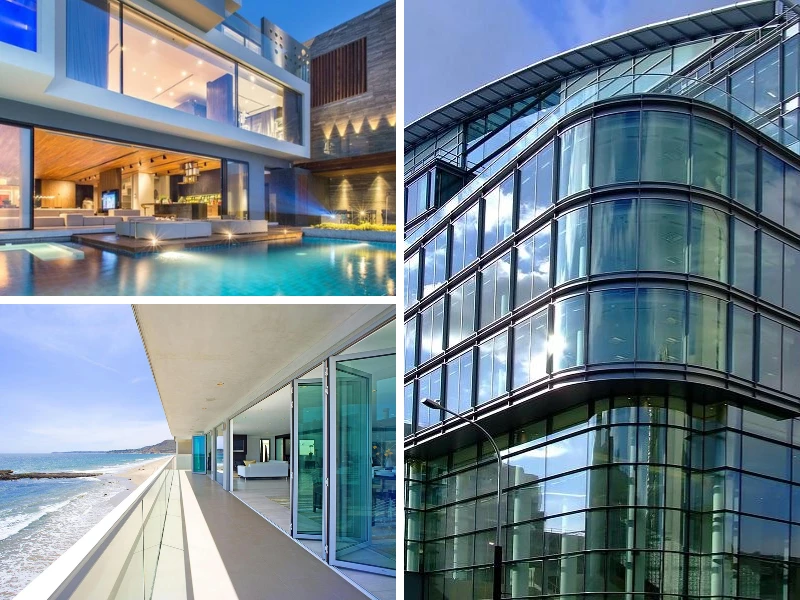
Premium anodized aluminum window and door systems designed for Bahrain’s harsh coastal climate. Features include 25μm AA25 grade anodized finish, salt spray resistance, thermal break design and large panoramic glass for luxury villas and commercial buildings.
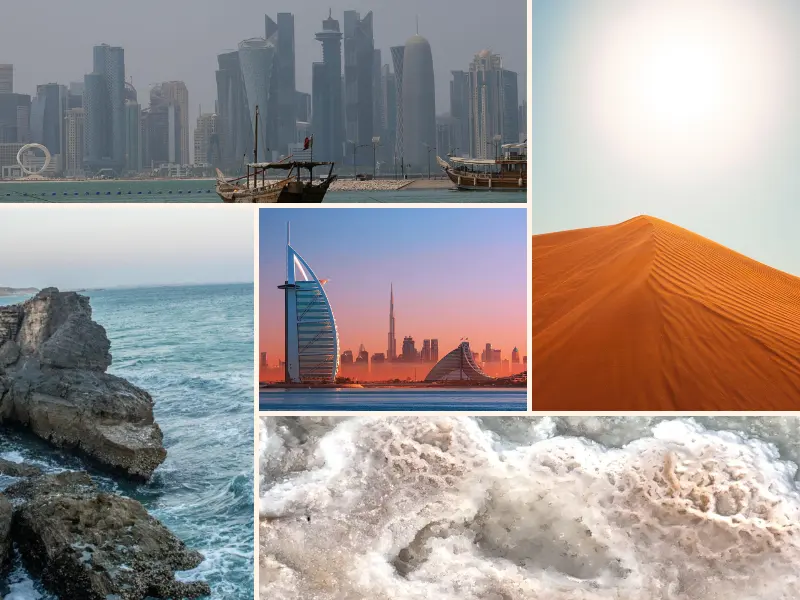
How Harsh Is Bahrain’s Coastal Environment for Windows?
In the projects I have handled, some of the closest ones to the sea are only about 200 meters away. In such locations, several problems repeatedly appear.
1. Salt Spray (Marine Environment Exposure)
This is very common. Sea winds carry salt and chloride ions almost continuously. If a coated window has tiny pinholes or if there is a slight scratch during installation that is not properly treated, chloride ions will penetrate the coating and start corrosion from underneath.
By the time homeowners in Bahrain notice bubbling or swelling on the surface, the aluminum underneath is often already heavily corroded. We have seen this in after-sales cases more than once — it is not an isolated issue.
2. Extreme Heat and UV Exposure
Bahrain summers are extremely hot. At midday, window surfaces can easily reach very high temperatures — around 60°C is very common.
Under continuous high temperature and strong UV exposure, organic coatings accelerate chemical bond breakdown, which leads to:
- Color fading
- Surface chalking
- Loss of gloss after a few years
Some powder-coated projects look fine in the first two years, but after 3–4 years the color becomes noticeably dull, and after about 5 years the gloss is almost gone.
3. Wind-Blown Sand
Although Bahrain is surrounded by sea, some areas still experience strong wind and sand, especially in certain months of the year.
Over time, sand particles hitting the surface create continuous physical abrasion. If the coating hardness is not strong enough, the surface will gradually become scratched.
What Makes Anodized Aluminum Different?
Before I entered this industry, I thought anodizing was just another surface finish, similar to powder coating or fluorocarbon coating.
Later I realized the fundamental logic is completely different.
Powder coating and fluorocarbon coating are layers added onto aluminum. Anodizing is a process where the aluminum itself grows an oxide layer.
One is “wearing a coat”, the other is “growing skin”.
This difference becomes very obvious in coastal environments.
The anodized oxide layer, after sealing, is very dense and has strong chemical inertia against chloride ions. Based on our after-sales records from coastal projects, anodized systems have almost no corrosion complaints compared with some coated systems.
UV and Heat Resistance
Another key advantage of anodized aluminum windows is UV resistance.
The coloring of anodized aluminum is formed inside the microscopic pores of the oxide layer, and it uses inorganic metal ions.
UV light easily destroys organic pigments, but it is much harder to damage inorganic color structures.
That is why anodized finishes usually only darken slightly over time, instead of fading into a completely different color.
Hardness and Surface Durability
The hardness of the anodized layer can reach HV300–500.
Wind-blown sand in coastal areas cannot easily leave marks on the surface, and daily cleaning does not easily cause scratches.
Not Without Lessons Learned
In the early years, we also supplied some powder-coated windows for coastal projects in Bahrain. In the first two years, feedback was generally good.
But after 4–5 years, problems started appearing:
- Fading surfaces
- Peeling coatings
- Rust near hinges
We later realized that some issues were not only about surface finish.
Hardware failures were even more common than frame issues. Some projects used 304 stainless steel hardware to save cost, but in coastal salt spray environments, it does not last long. After 2–3 years, rust spots started appearing.
Later we began recommending 316 stainless steel hardware for all coastal villa windows. The cost difference is small, but the reliability improvement is significant.
Another weak point is sealing strips. PVC gaskets age quickly under heat and UV exposure. They become hard and shrink, allowing sand and salt to enter the system. Later we switched to EPDM or silicone seals.
Thermal break aluminum windows are also very important. In Bahrain’s hot climate, without thermal break, the frame becomes a heat conductor.
Anodized aluminum protects the exterior durability, while thermal break improves interior comfort. Both are necessary.
The Hainan Project Example
In 2016, we worked on a coastal project in Hainan. The climate conditions were very similar to Bahrain: high temperature, high humidity, strong UV, and salt exposure.
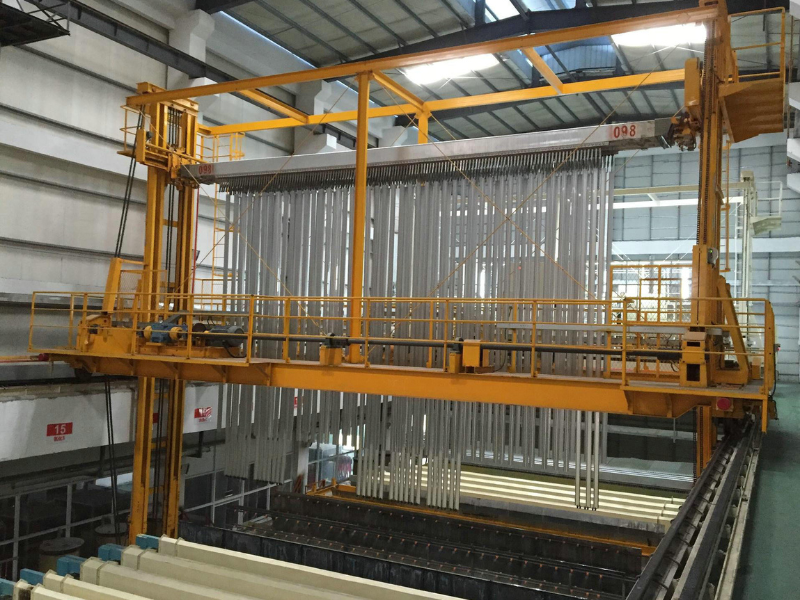
The client required black anodized aluminum with AA25 thickness (25 microns), which is higher than standard inland projects.
The system also used thermal break profiles, imported insulation strips, 316 stainless steel hardware, and EPDM seals.
Last year, one of our colleagues revisited the project. After nearly 10 years, the windows showed almost no visible change — no fading, no chalking, and no corrosion.
A color difference test showed ΔE under 1.5, which is almost invisible to the human eye.
This gave us more confidence when recommending anodized aluminum windows for Bahrain coastal projects.
How to Choose Anodized Aluminum Windows in Bahrain?
- Do not save on coating thickness — use AA25 for coastal areas
- Combine anodizing with thermal break systems
- Use 316 stainless steel hardware for marine environments
- Use EPDM or silicone sealing strips instead of PVC
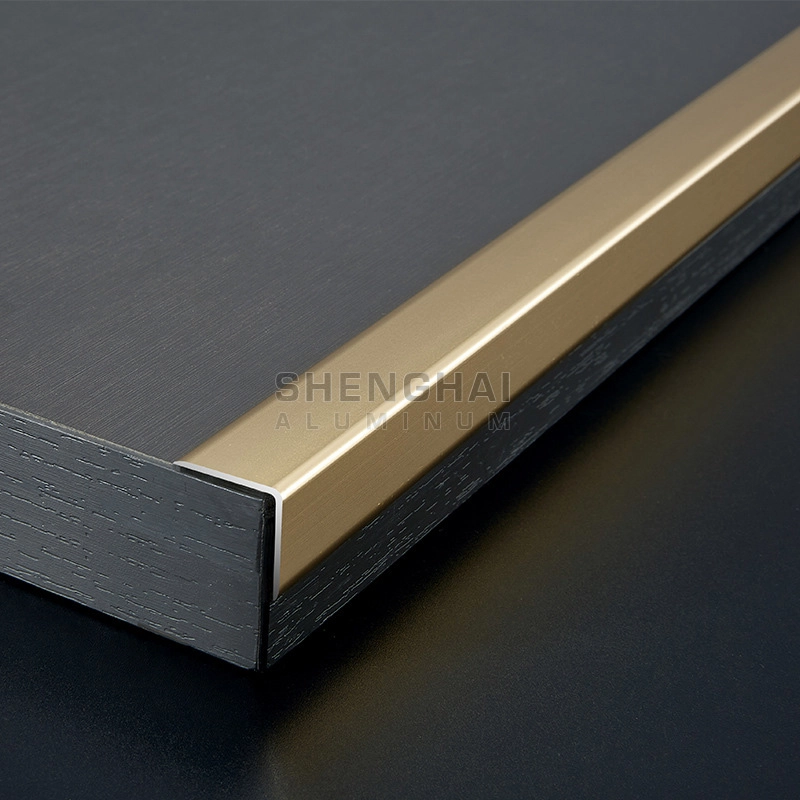
- Classic colors like silver, matte black, champagne, and bronze are enough
If you are working on coastal projects in Bahrain, anodized aluminum windows are not just a design choice — they are a long-term durability decision.
They provide better corrosion resistance, UV stability, and long-term appearance retention in harsh marine environments, making them one of the most reliable solutions for coastal villas and high-end projects.