
The Persian Gulf region is known for its high temperatures (exceeding 50°C in summer), high humidity (over 90% along the coast), high salt fog (with a salinity approximately 15% higher than that of ordinary seawater), and intense ultraviolet radiation. These extreme conditions can rapidly destroy ordinary metals through chloride ion pitting corrosion. Marine-grade aluminum doors and windows are specifically designed to meet these challenges: they feature 6063-T5/T6 high-strength aluminum alloy frames, thermal break systems, AA25 anodized or Qualicoat Class 3 powder-coated finishes, and SS316 stainless steel hardware. They resist salt fog corrosion, withstand hurricane-force winds (wind pressure resistance ≥2500 Pa), provide thermal insulation and energy efficiency, and resist UV aging for over 30 years. Additionally, they support large-format glass panels, perfectly meeting the demanding requirements of coastal villas and high-end projects in the Persian Gulf.
What is the weather like in the Persian Gulf?
The Persian Gulf coastline encompasses eight countries: the six Gulf Cooperation Council (GCC) nations—Saudi Arabia, the United Arab Emirates, Qatar, Kuwait, Oman, and Bahrain—and the two other coastal nations, Iraq and Iran. The region is characterized by high temperatures, high humidity, high salt fog levels, and intense solar radiation.
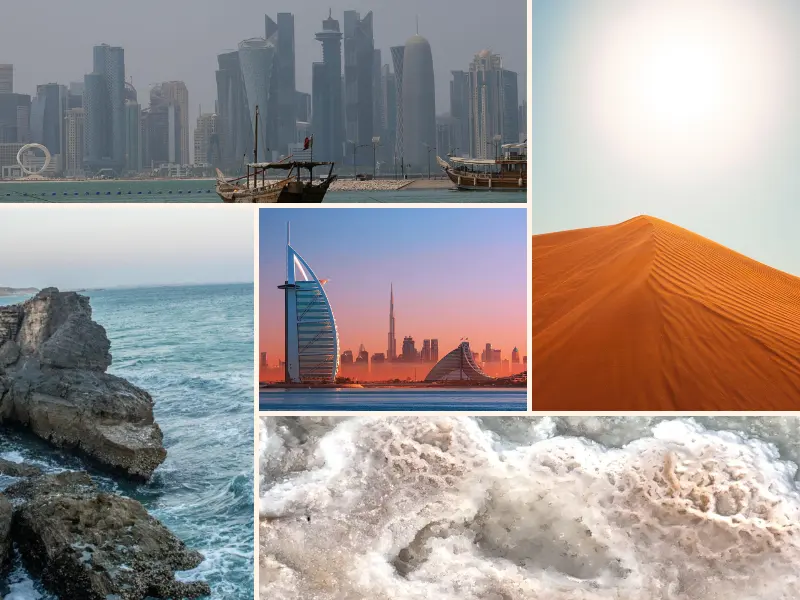
From 90% humidity in Abu Dhabi to the hyper-saline air of Jeddah, our aluminum systems are built to withstand the world’s harshest testing ground.
High Humidity
The Persian Gulf is a region with high humidity. Under high temperatures, seawater evaporates extremely easily. In coastal areas such as Dubai and Abu Dhabi, humidity can exceed 90% during the hot season, and condensation droplets easily form on metal surfaces. Without high-performance doors and windows, high humidity will exacerbate indoor condensation and mold growth.
Salt Fog Environment
This characteristic of the Persian Gulf is well-known; the salinity of its seawater is approximately 15% higher than that of ordinary oceans. Winds in the Persian Gulf are often strong, and when sea breezes blow inland, they carry large amounts of chloride ions—this is what we refer to as a salt fog environment. It poses a severe threat to ordinary metal structures, causing chemical reactions that corrode the metal.
Note: How does salt fog destroy metal?
In coastal cities such as Jeddah, Doha, or Dubai, the primary enemy facing buildings is pitting corrosion. Chloride ions in sea breezes penetrate the natural oxide layer on the surface of aluminum, forming microscopic holes that erode the metal structure from within. The extreme heat and high humidity of the Persian Gulf act as “accelerators,” causing corrosion to occur more than 10 times faster than in inland environments. Unprotected standard aluminum profiles will rapidly develop white rust, surface degradation, and even lose their structural integrity.
High Temperatures
The Persian Gulf lies within the subtropical high-pressure belt. During the summer, it is dominated by subsiding air currents, resulting in minimal precipitation and intense direct sunlight. Daytime temperatures from May to September can exceed 40°C, and in certain inland areas of Saudi Arabia and Kuwait, they can even surpass 50°C. Nighttime temperatures can also exceed 30°C.
Year-Round Intense UV Radiation
Intense UV radiation is a common phenomenon in high-temperature regions and has a highly destructive effect on non-metallic materials. Therefore, doors and windows in Gulf countries require the use of metallic materials, such as aluminum.
What are the features of marine-grade aluminum doors and windows?
High-grade finishes
In environments like the Persian Gulf region, aluminum alloy doors and windows must undergo surface treatment, and the finish must be one grade higher in strength than standard finishes. For example, powder coating must meet Class 3 standards, and anodizing must reach AA25 grade. These two are classic and commonly used surface treatments capable of withstanding regions like Dubai, Riyadh, and Kuwait, which are subject to salt fog or high temperatures and intense UV radiation.
Thermal Break Aluminum Frames
To withstand the extreme heat of the Persian Gulf, aluminum alloy frames require thermal break treatment to mitigate the effects of high temperatures. This helps Middle Eastern buildings conserve significant amounts of electricity, eliminating concerns about living in a “steam oven.”
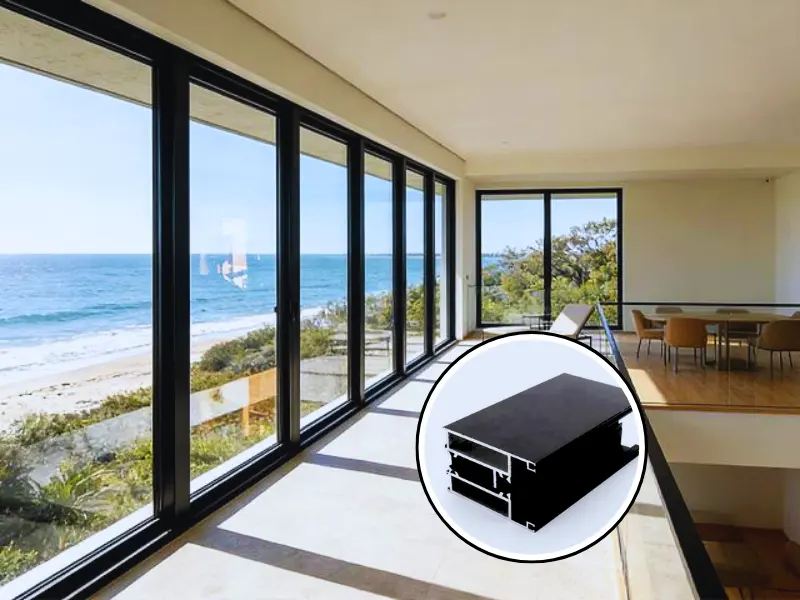
Our thermal break technology uses PA66 insulation to keep interiors cool in 50°C heat while providing structural integrity for large-format glass panels.
High-Grade Aluminum Alloy
To withstand strong sea winds, aluminum alloy frames must use the 6063-T5/T6 alloy grade, which contains lower levels of iron and copper. This grade offers both toughness and strength, ensuring the frames remain resistant to deformation even during typhoon conditions.
SS316 Hardware
In addition to the aluminum alloy frames, other hardware components must also be corrosion-resistant. Therefore, SS316-grade stainless steel is used for load-bearing parts and locks.
Wide-view glass door and window panels
Coastal buildings often feature wide-view glass panels to showcase the beautiful scenery beyond. These are commonly found in tourist areas and villas, such as the beachfront villas on The Palm Jumeirah in Dubai or in Lusail.
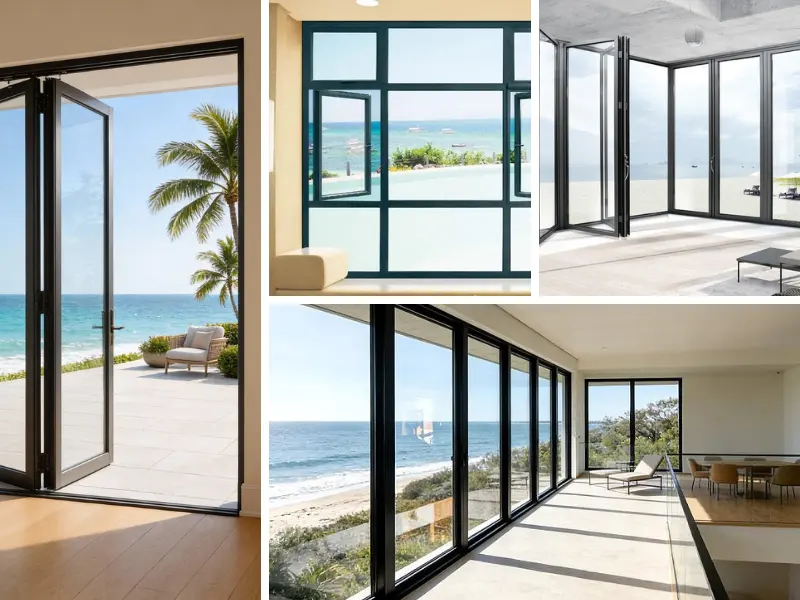
Enhance your coastal lifestyle with our marine-grade slim frame systems, designed for the luxury beachfront projects of The Palm Jumeirah and Lusail.
Why are marine-grade aluminum doors and windows suitable for the Persian Gulf region?
High-temperature resistance and thermal break insulation
Marine-grade doors and windows generally require special surface treatments and thermal break designs to withstand the extreme heat of the Persian Gulf.
UV resistance
Surface-treated aluminum doors and windows not only withstand high temperatures but also offer strong resistance to UV rays. Unlike standard PVC materials, which may not last more than a few years under direct sunlight, marine-grade aluminum doors and windows can remain functional for over 30 years.
Structural Strength
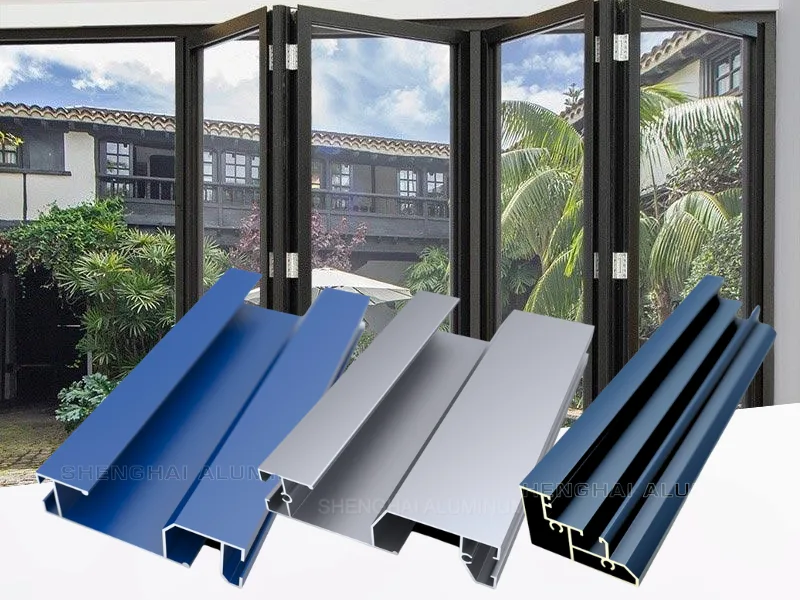
Marine-grade aluminum doors and windows must possess exceptional structural strength. Even when crafted into extremely narrow folding doors, they can withstand hurricane-force winds (wind pressure resistance ≥2500 Pa, equivalent to a Category 12 or higher typhoon). Combined with the effects of tempered glass and weatherstripping, the doors and windows remain intact and prevent glass breakage under high wind pressure.
Salt Fog Resistance
One of the most critical features, as protection against the salt fog environment of the Persian Gulf is essential. The surface treatment of these aluminum doors and windows enables them to withstand the harshest salt fog conditions found in regions such as the island nation of Bahrain and Jeddah.
Wide-View Glass Panels
This is another hallmark of marine-grade aluminum doors and windows. Coastal architecture predominantly features a style combining metal frames with extra-large, wide-view glass panels, allowing occupants to enjoy the seaside scenery from the comfort of their interiors.