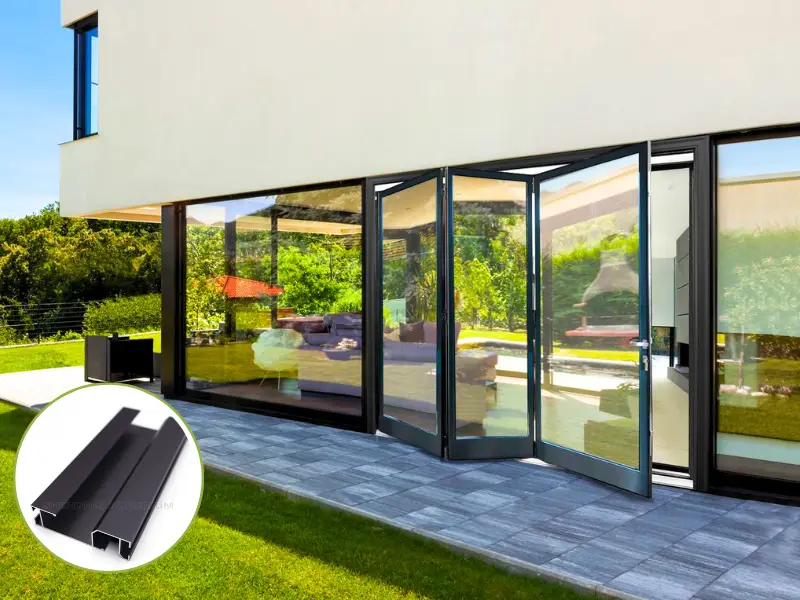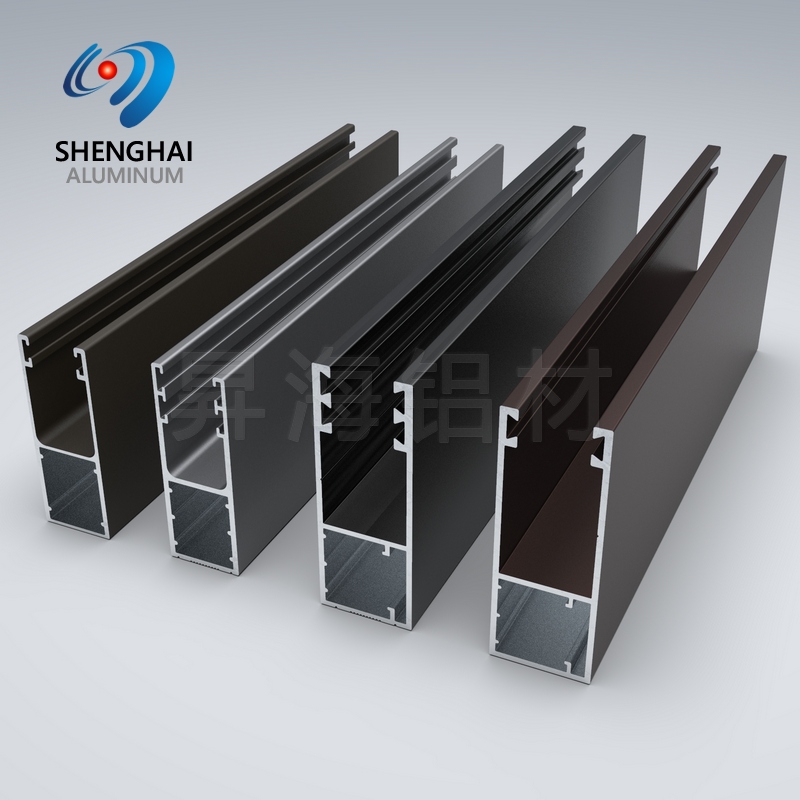

We at SH-EXTRUSION once handled a typical case in a high-end apartment in Dubai Marina that was just completed in 2025: Even though it was winter, the windowsills were covered with water droplets every morning. The homeowner tried raising the air conditioning temperature and ventilating the space, but the drywall trim still developed mold due to the moisture. This is a classic case of “Window Condensation in Dubai.” Many developers attribute this to the climate, but in reality, it is often an early warning sign of an imbalance in the building’s thermal system.
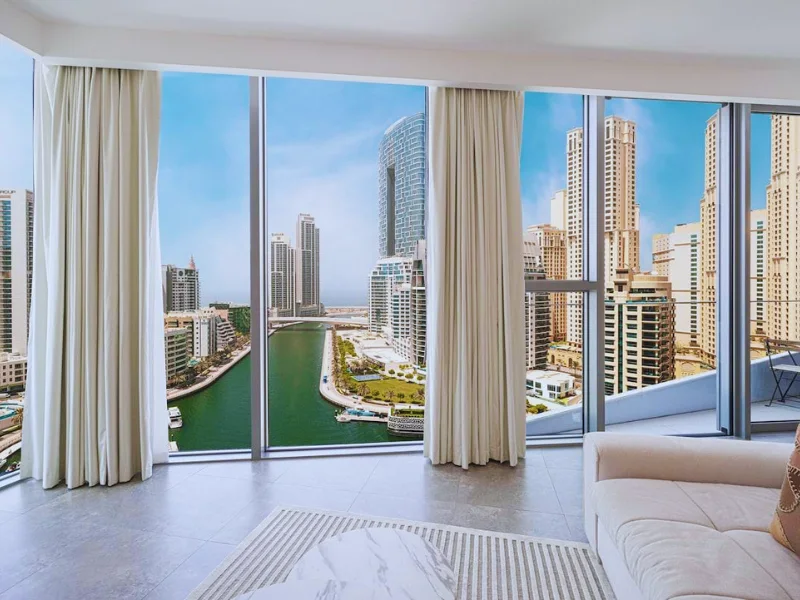
View from a luxury Dubai Marina apartment featuring high-performance architectural windows.
Why do windows sweat in high humidity?
The physics behind condensation is very straightforward: when warm, humid indoor air comes into contact with a cold surface below the dew point, moisture condenses into liquid. If your windows are developing condensation, this is a design flaw that can be resolved by using high-spec thermal break profiles.
In Dubai’s hot and humid climate, standard aluminum alloy window frames are excellent heat conductors. They transfer cool air to the inner side of the profiles, causing the surface temperature of the window frame to drop far below the indoor air’s dew point, which leads to “window sweating.”
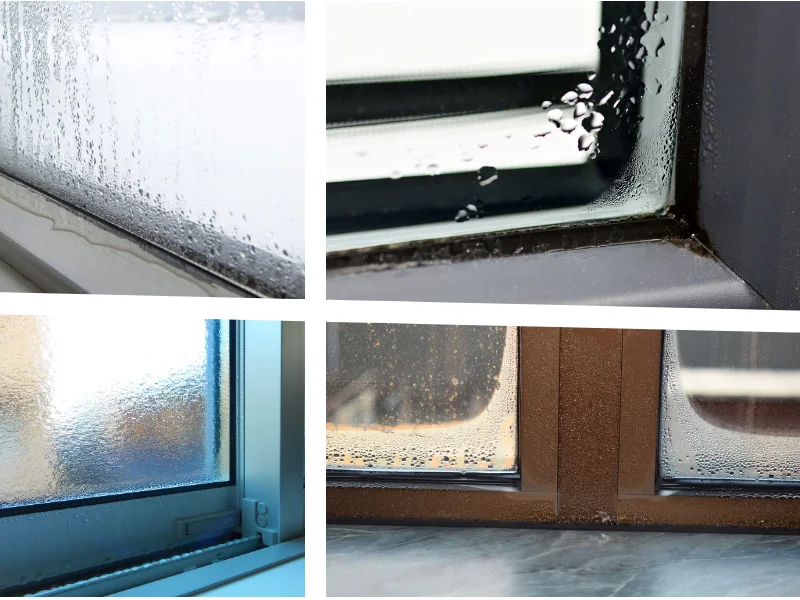
Signs of Windows Sweating and mold growth in Dubai high-rise apartments.
Is window condensation normal in new Dubai apartments?
Many homeowners believe that condensation in new homes is a sign that “the house is breathing” or that “the new walls aren’t fully dry.” In fact, this is primarily due to the excessive airtightness of modern buildings. To maximize air conditioning efficiency, new high-rise apartments in Dubai are built with extremely high airtightness, preventing moisture generated indoors (from breathing, showering, and cooking) from escaping naturally. When this moisture encounters the coldest surface in the building—namely, an aluminum alloy window without a thermal break—it condenses in large quantities.
What is the cure for interior window condensation?
Many developers, upon receiving complaints, habitually recommend that homeowners use dehumidifiers. However, for large-scale construction projects, this is merely a temporary fix that does not address the root cause.
For developers in the UAE, the permanent solution to “sweating windows” is not a dehumidifier, but a structural system upgrade. By specifying thermal break profiles in Dubai with warm-edge spacers, you shift the dew point outside the interior frame, effectively eliminating condensation and the resulting mold risks for the building’s entire lifecycle.
How can this problem be solved through other methods?
Use Thermal Break Profiles in Dubai:
High-performance systems utilize PA66-GF25 nylon thermal breaks to physically separate the interior and exterior sides of the aluminum profiles. This not only blocks the intense heat of Dubai’s sun from entering but also prevents the inner side of the interior window frame from becoming cold due to excessive temperature differences. It is the foundation for eradicating window sweating.

Engineering visualization of the Cold Bridge Effect and how thermal break profiles prevent condensation in Dubai.
Upgrade to Warm-Edge Spacers:
Due to cost-cutting measures, many projects use traditional aluminum spacers around the perimeter of insulated glass units. This results in a noticeable ring of condensation along the glass edges. Adopting warm-edge technology can significantly raise the surface temperature of the glass edges, completely eliminating the persistent problem of window condensation in Dubai.
In Conclusion
In Dubai, window condensation is not caused by “bad luck” or “setting the air conditioning too low”; it is a direct reflection of inadequate building performance. As a developer or contractor, if you want to avoid getting bogged down in endless mold-related repair complaints after handover, the best investment you can make is to select high-performance thermal break profiles in Dubai during the design phase.
This not only installs a “moisture shield” for your building but also builds a solid defense for your brand’s reputation. Contact us at SH-EXTRUSION for a reasonable solution.