Based on nearly a decade of experience across countless PV projects in Saudi Arabia, we at SH-EXTRUSION, a leading aluminum solar mounting structure manufacturer and trusted PV mounting systems supplier Middle East, have found that extruded aluminum alloys (such as 6005-T5) are consistently preferred over galvanized steel for several key reasons. Fundamentally, aluminum offers inherent resistance to the corrosive effects of coastal salt spray and the abrasive wear caused by wind-blown sand. Furthermore, its high thermal conductivity facilitates heat dissipation from PV modules—even in ambient temperatures exceeding 50°C—thereby helping to maintain power generation efficiency. Additionally, the lightweight and modular nature of aluminum structures significantly reduces foundation costs and on-site labor expenses, particularly when installing systems on soft, sandy terrain.
As Saudi Arabia’s “Vision 2030” initiative drives explosive growth in both gigawatt-scale solar farms and commercial rooftop projects, contractors face a critical decision: which type of PV mounting structure to choose? While galvanized steel has traditionally been a common choice for solar mounts, the extreme environmental conditions of the Saudi Arabian desert make aluminum profile mounts a far more suitable option. Today, high-quality wholesale extruded aluminum solar brackets and 6005-T5 aluminum solar racking have emerged as the most popular material choices for PV mounting systems throughout Saudi Arabia.
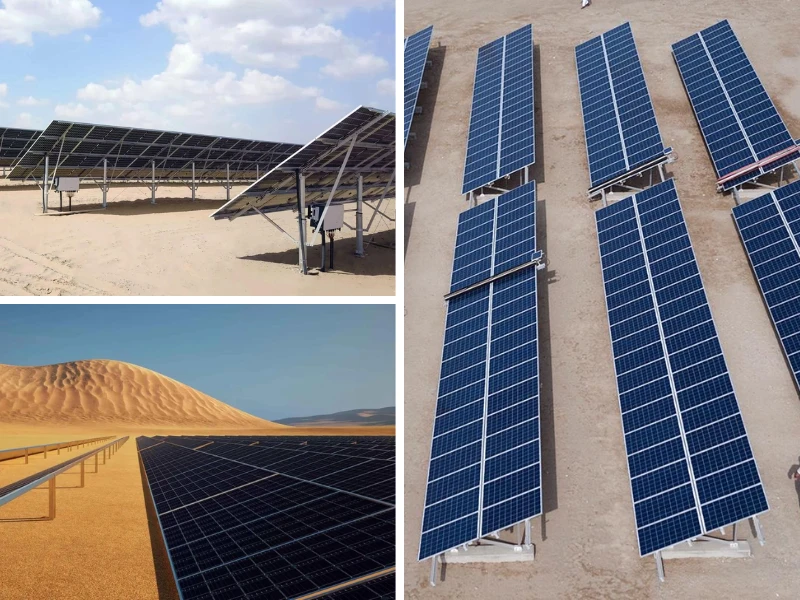
Lightweight and modular extruded aluminum solar mounting systems provide durable foundations for utility-scale PV projects in the Middle East’s extreme desert climates.
I. How Does Saudi Arabia’s Extreme Climate Impact Solar PV Structures?
- Strong Winds, Sandstorms, and the “Sandblasting Effect”: Inland regions—such as the capital, Riyadh—frequently experience Shamal sandstorms with wind speeds exceeding 100 km/h. These storms carry high-hardness silica sand particles that create a powerful “sandblasting” effect, rapidly eroding the protective zinc coating on galvanized steel mounts. In contrast, the anodized finish on aluminum alloy mounts remains virtually unaffected by the abrasive impact of these wind-blown sands. For contractors wondering how to protect solar brackets from sandstorms in Saudi Arabia, this naturally self-healing material is the definitive answer.
- Coastal Corrosion from High Salt Spray: In key commercial hubs along the Red Sea coast—such as Jeddah—the environment is characterized by persistently high humidity and elevated chloride ion concentrations. Under these conditions, standard galvanized steel mounts are highly susceptible to rapid corrosion—often initiating at cut edges or weld seams—which threatens the structural integrity and lifespan of the system. Consequently, anodized aluminum profile mounts are required to effectively withstand these highly corrosive, salt-laden coastal environments, serving as the ultimate rust-proof PV mounting profiles for coastal areas (Jeddah/Dammam).
- Severe Thermal Cycling and Extreme High Temperatures: Surface temperatures in the Saudi Arabian desert can soar to over 60°C, accompanied by significant temperature fluctuations between day and night. Extreme thermal expansion and contraction impose immense stress on the rigid connection points of steel structures, frequently triggering micro-cracks; simultaneously, high temperatures directly lead to a significant decline in the power generation efficiency of photovoltaic modules.
- Impact of Loose Sandy Soil and Foundations: The geology of desert regions is characterized by loose soil, necessitating high resistance to uplift and overturning for mounting system foundations. Heavier mounting systems often entail deeper and larger concrete foundations—a costly proposition.
- Extreme Aridity and Dust Contamination: With an average annual humidity of less than 30%, the aging and embrittlement of common polymer components—such as plastics and rubber—are significantly accelerated. Furthermore, sand and dust rapidly accumulate on modules; if not cleaned promptly, this can result in power generation losses within a short timeframe, thereby mandating that mounting systems be designed to facilitate the seamless integration of automated cleaning systems.
Lightweight and modular extruded aluminum solar mounting systems provide durable foundations for utility-scale PV projects in the Middle East’s extreme desert climates.
II. What Are the 7 Core Advantages of Extruded Aluminum for Solar Mounting Systems?
Aluminum vs galvanized steel solar racking comparison: Here is a detailed breakdown of why extruded aluminum comprehensively outperforms traditional steel structures in desert environments.
1. Inherent Corrosion Resistance (Particularly Against Sand, Wind, and Salt Spray)
The corrosion protection of galvanized steel relies entirely on its surface zinc coating; should this layer be damaged during installation (e.g., by cutting) or eroded by wind-blown sand, the exposed steel substrate will rapidly develop “red rust.” This oxidation process causes the material to expand in volume, thereby compromising structural integrity and safety.
Aluminum, in contrast, behaves quite differently. Upon exposure to air, it immediately forms a dense, highly chemically stable natural oxide film on its surface. This film possesses a remarkable “self-healing” capability: even if scratched by sand or gravel, the newly exposed aluminum beneath instantly reacts with oxygen to regenerate the protective layer, effectively halting the corrosion process. To withstand the harsh environmental conditions of Saudi Arabia, aluminum rails treated with a high-film-thickness AA25-grade anodization process offer superior surface hardness and abrasion resistance, requiring virtually no maintenance for many years—even in coastal regions and areas prone to severe sandstorms, such as Jeddah.
2. Lightweight Design and High Strength
Aluminum possesses a density approximately one-third that of steel; however, through intelligent cross-sectional design and heat treatment strengthening (utilizing alloys such as 6005-T5), its yield strength can rival—and even surpass—that of standard structural steel. This ensures that aluminum mounting systems can effortlessly withstand even the most severe sandstorms prevalent in the Saudi Arabian desert environment. This lightweight characteristic is especially critical when designing commercial tin roof solar mounts, as it drastically reduces the dead-load pressure on existing building structures.
Foundation Costs: The lightweight nature of aluminum significantly reduces the structural load imposed on loose sandy soil, allowing for shallower and smaller pile foundations. This directly translates into substantial cost savings regarding both concrete consumption and pile-driving operations. Transport and Installation: A single vehicle can accommodate a larger volume of materials, resulting in significantly lower fuel consumption and freight costs for long-distance transport across desert terrain. On-site manual handling and assembly are expedited by utilizing pre-assembled solar mounting systems for fast installation, requiring no heavy machinery and thereby effectively reducing overall labor costs.
3. Excellent Heat Dissipation
When searching for the best PV mounting structures for extreme heat, thermal conductivity is a primary metric. In the face of Saudi Arabia’s extreme heat and soaring summer temperatures, the power generation efficiency of PV modules tends to decline to a certain extent as their operating temperatures rise. Steel, possessing relatively poor thermal conductivity, tends to trap heat on the back of the modules. In contrast, aluminum alloy boasts a thermal conductivity coefficient approximately three to four times that of steel; the entire mounting system effectively functions as a massive heat sink, rapidly conducting and dissipating heat into the surrounding air. When combined with an elevated structural design that promotes air convection behind the modules, aluminum mounts effectively lower the modules’ operating temperatures—a feature that translates into tangible gains in power generation yield throughout Saudi Arabia’s prolonged hot season.
4. Favorable Thermal Expansion Characteristics
Aluminum has a higher coefficient of thermal expansion than steel—a characteristic that was once considered a design challenge but has now been transformed into an advantage through flexible connection designs. By incorporating structural elements such as sliding slots and telescopic connectors, the system can perfectly absorb the deformation stresses generated by daily thermal cycles, avoiding the fatigue micro-cracks often seen in rigid, welded steel structures. Furthermore, unlike certain types of steel, aluminum alloys do not undergo brittle phase transitions at high temperatures, thereby maintaining consistent toughness and structural stability at all times.
5. Customizable Shapes via Extrusion Processing
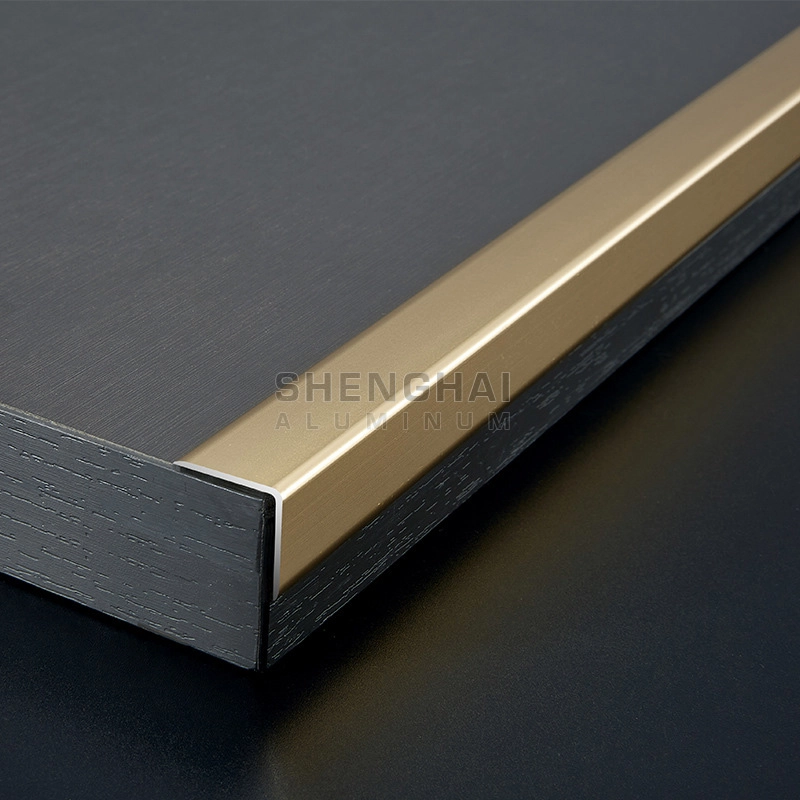
This constitutes one of the most significant processing advantages of aluminum. While steel is typically limited to being roll-formed into standard cross-sectional shapes, aluminum alloys can be extruded—using custom dies—into highly complex, functionally integrated profiles. These capabilities extend to the creation of specialized components such as heat sinks, window and door frames, and decorative metal trim. The integrated cable management channels found in PV mounting systems represent one such complex structural application: by concealing cables almost entirely within the interior of the mounting rails, the system shields them from direct exposure to the harsh desert sun and protects them against abrasion and degradation caused by wind and sand. This significantly extends the service life of the PV mounting system; for instance, a PV mounting system we installed in Riyadh, Saudi Arabia, in 2013 has remained in continuous operation for over 10 years without requiring any cable replacements.
6. High Recyclability and Environmental Sustainability
The energy consumption required to recycle and remelt aluminum is merely 5% of that needed for primary aluminum production, and the recycling process entails no degradation in material quality. Upon the decommissioning of a power plant, the residual value of its aluminum mounting structures remains exceptionally high; this aligns perfectly with the rigorous requirements for sustainable development and a circular economy set forth by Saudi Vision 2030 and futuristic urban projects such as NEOM.
7. Absence of Magnetic Interference: Safeguarding Smart Grids and AI-Driven Dispatch
With the deep integration of artificial intelligence into power grid dispatch, intelligent operations and maintenance, and monitoring systems, electromagnetic compatibility has become increasingly critical. Aluminum alloy mounting structures are completely non-magnetic; they generate no electromagnetic interference that could disrupt sensitive communication and control equipment. Consequently, they provide a pristine operating environment for modern, AI-driven smart grids, thereby ensuring the precision and reliability of data acquisition and remote dispatch operations.