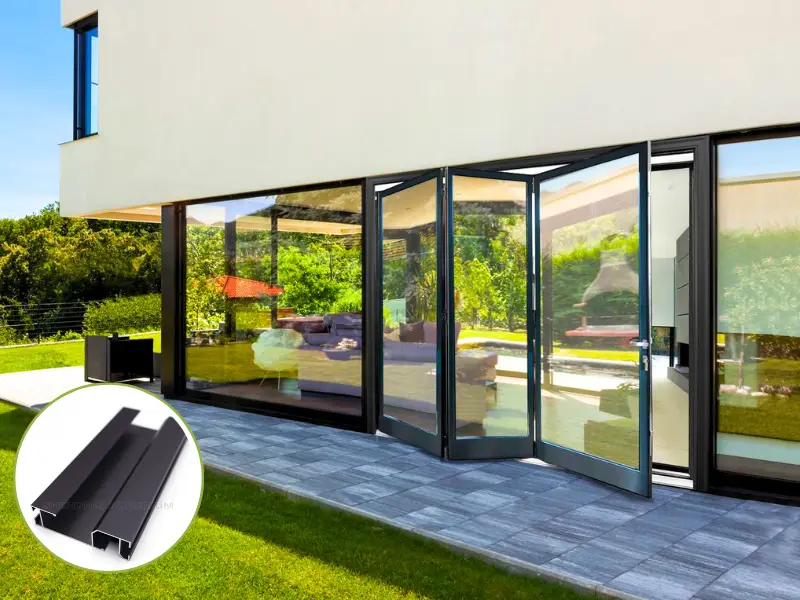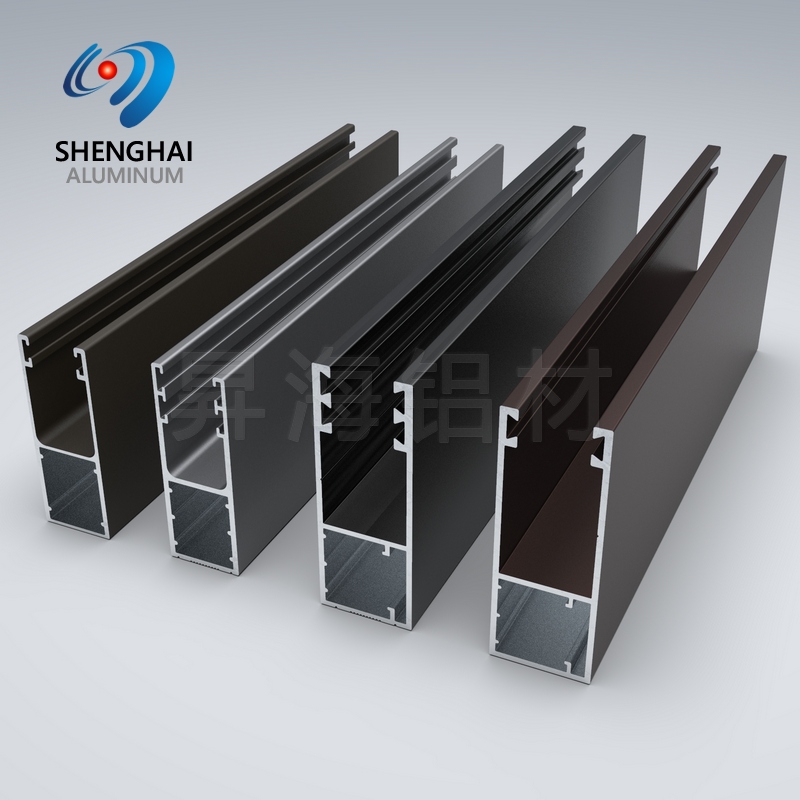

In extreme temperatures of 50°C, thermal break profiles reduce heat conduction by several hundred times by embedding a low-thermal-conductivity PA66 thermal break strip between the inner and outer sides of the aluminum alloy frame. Combined with Low-E insulated glass and multiple seals, this blocks thermal radiation and convection, thereby lowering indoor temperatures by 3–5°C and reducing air conditioning energy consumption by 30–40%.
I. Why Does the Middle East Experience Extreme Temperatures of 50°C?
The intense heat in the Middle East is not caused by a single factor, but rather by a “perfect storm” of overlapping geographical and climatic conditions:
- Intense solar radiation at low latitudes: The Tropic of Cancer runs through countries such as Saudi Arabia, the United Arab Emirates, and Oman. During summer, the sun’s altitude at noon approaches 90°, resulting in solar radiation per unit area that is 2–3 times higher than in temperate regions.
- The “lid effect” of the subtropical high-pressure system: The region is dominated by the subtropical high-pressure system year-round. As air currents descend, they undergo adiabatic heating, while cloud and rain formation is completely suppressed. With over 300 sunny days a year, heat cannot be dissipated through precipitation.
- Rapid Heating of the Desert Surface: The vast desert surface has extremely low thermal capacity; after absorbing heat during the day, temperatures soar, with ground temperatures frequently exceeding 70°C, acting like a giant baking tray that continuously heats the air near the surface.
- The Compounding Effect of Coastal High Humidity: Along the coasts of the Persian Gulf and the Red Sea, massive evaporation occurs from shallow waters, but descending air currents prevent water vapor from rising to form rain, resulting in low-level humidity consistently remaining above 80% year-round. With temperatures of 45°C combined with high humidity, the heat index can exceed 60°C, creating suffocating “sauna-like” conditions.

In the Middle East, summer temperatures frequently soar to 50°C, creating a massive challenge for building insulation and energy consumption.
II. How Does Heat Transfer Into the Interior? Three Primary Pathways
Under the extreme 50°C heat of the Middle East, heat penetrates indoors relentlessly through three main pathways:
- Direct Conduction Through Metal Window Frames: This is the most easily overlooked yet most significant pathway. Standard aluminum alloy has a thermal conductivity as high as 210 W/(m·K). Under intense sunlight, the outer surface of the window frame can quickly heat up to over 70°C, and heat flows unimpeded to the interior side, much like an electric current through a metal wire. Our field tests show that at noon during the Riyadh summer, the temperature of the interior side of a standard aluminum window frame can exceed 45°C, making it too hot to touch.
- Solar Radiation Penetrating Glass: Transparent glass allows approximately 50% of solar heat radiation to enter the room directly. Once absorbed by the floor, walls, and furniture, this heat is slowly released back into the air. Even with the curtains drawn, the heat that has already entered the room still requires air conditioning to dissipate.
- Hot Air Convection and Seepage: Hot air from outside at 50°C continuously flows into the room through gaps in doors and windows. Conventional doors and windows have poor sealing performance, resulting in an air exchange rate of 3–5 times per hour—equivalent to completely replacing the indoor cool air with hot air multiple times.
III. Why Must Aluminum Alloy Doors and Windows Feature Thermal Breaks?
In environments exceeding 45°C in the Middle East, conventional aluminum alloy doors and windows lose nearly all their thermal insulation effectiveness. Many homeowners find that even when the air conditioner is set to 18°C, the room still feels uncomfortably warm, and electricity bills are shockingly high.
The problem lies in the high thermal conductivity of aluminum alloy itself. When you draw the curtains to block solar radiation and close the door to keep out hot air, you often overlook the aluminum window frame—a constant “heat source.” It continuously conducts heat from outside into the room 24 hours a day. The air conditioner must simultaneously offset both the normal indoor heat load and the additional heat load from the window frame, causing the compressor to run at full capacity constantly.
Thermal break technology was developed specifically to solve this problem.
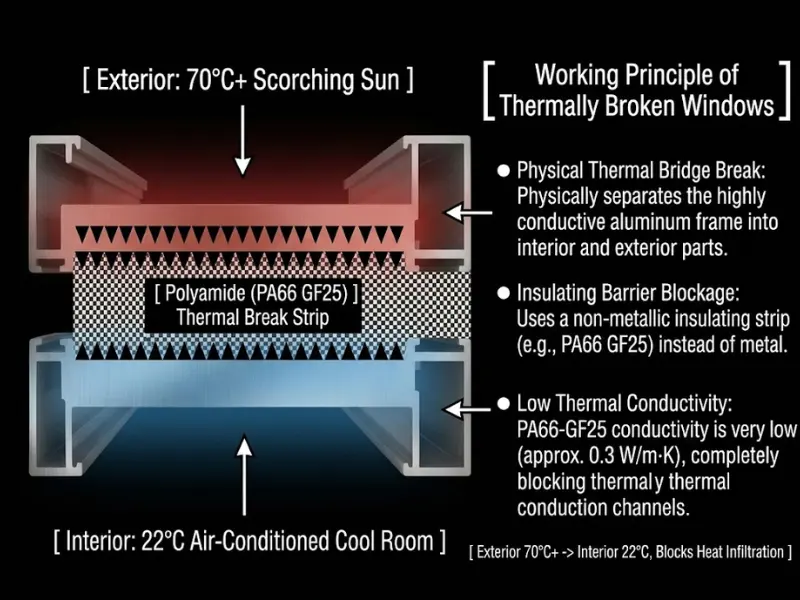
How it works: The high-performance PA66-GF25 polyamide insulation strip with a low thermal conductivity of 0.3 W/(m·K) effectively blocks thermal conduction channels.
IV. How Thermal Break Aluminum Windows and Doors Work: Three Steps to Block Heat Invasion
Step 1: The Fatal Flaw of Standard Aluminum Windows
Aluminum is an excellent thermal conductor. You can imagine a standard aluminum window as a metal rod spanning the space between the interior and exterior—with an outdoor temperature of 70°C and an indoor temperature of 25°C, heat will rapidly flow along the rod from the high-temperature end to the low-temperature end. During the Middle Eastern summer, heat conducted through the window frame accounts for over 40% of the total heat transfer through the entire door and window system.
Step 2: How Does Thermal Break Technology Block Heat Transfer Pathways?
During production, thermal break aluminum profiles are precisely split in the middle, separating the originally solid aluminum profile into two independent sections: an exterior aluminum frame and an interior aluminum frame. These are firmly connected in the middle using reinforced polyamide (PA66-GF25) thermal break strips through a roll-bonding process.
This seemingly unremarkable thermal break is the core of the entire system:
– Its thermal conductivity is only 0.3 W/(m·K), approximately 700 times lower than that of aluminum.
– Its coefficient of thermal expansion is very close to that of aluminum alloy, so it will not deform, crack, or detach under the extreme day-night temperature fluctuations (up to 30°C) in the Middle East.
– It physically isolates the inner and outer aluminum frames, preventing direct contact.
The result is this: even when the exterior aluminum frame is heated to 70°C, heat transfer is significantly blocked at the thermal break, allowing the temperature of the interior aluminum frame to remain around 28–30°C. It feels only slightly warm to the touch and is never hot enough to burn.
Step 3: Comprehensive Blocking of Heat Invasion
A high-quality thermal break aluminum system simultaneously blocks heat through three primary pathways:
- Conduction Blocking: The thermal break interrupts direct thermal conduction through the metal, preventing the window frame from acting as a heat source.
- Radiation Control: Combined with Low-E insulated glass, it reflects over 90% of solar infrared radiation, reducing heat radiation entering the room at the source.
- Convection Sealing: The thermal break structure ensures the frame’s rigidity and stability; combined with multiple layers of EPDM (ethylene propylene diene monomer) gaskets, it reduces air infiltration by over 90%.
Final Result: Under extreme outdoor temperatures of 50°C, thermal break aluminum doors and windows can keep indoor temperatures 3–5°C lower than those with standard aluminum windows, reducing air conditioning energy consumption by 30%–40%.
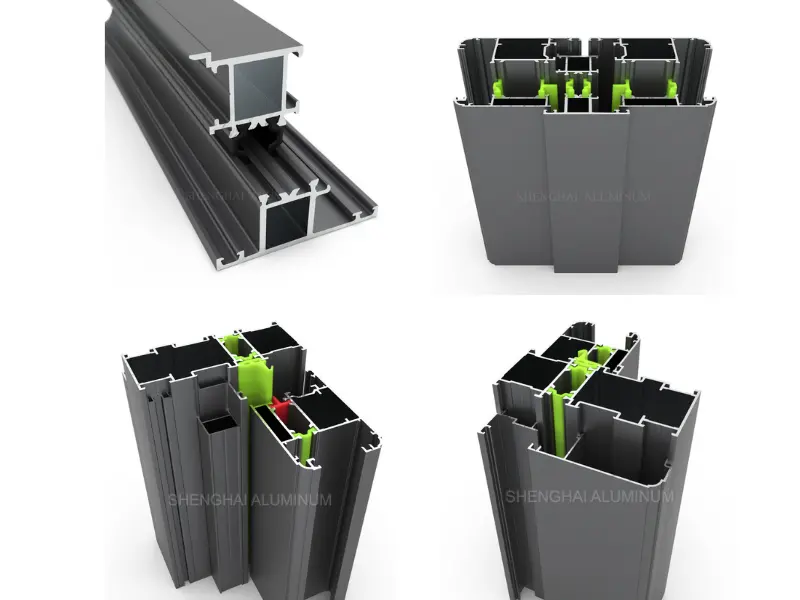
Precision-engineered thermal break extrusion profiles with multi-cavity structures and customized PA66 insulation strips for premium door and window systems.
V. Which Countries and Regions in the Middle East Mandate the Use of Thermal Break Windows and Doors?
In the Gulf Cooperation Council (GCC) and the Middle East and North Africa (MENA) regions, extreme climates have prompted governments to enact strict building energy efficiency regulations. New buildings that do not use standard-compliant thermal break aluminum windows and doors will fail to pass energy efficiency approvals and final inspections.
- Saudi Arabia: The country with the most stringent requirements. The Saudi Building Code (SBC 601/602 Energy Efficiency Section) is fully enforced and strictly regulated by the Saudi Standards, Metrology and Quality Organization (SASO/SABER). For all new buildings—including the NEOM city, Riyadh commercial complexes, and private villas—the thermal transmittance (U-value) of windows and doors must be ≤2.0 W/(m²·K). Some high-end projects in key cities such as Riyadh, Jeddah, and Dammam even require a U-value of ≤1.8 W/(m²·K).
- United Arab Emirates: Dubai and Abu Dhabi have each introduced their own green building codes (the Dubai Green Building Code and the Estidama Pearl Rating System), mandating the use of thermal break aluminum window and door systems in all new buildings and setting clear requirements for thermal insulation, sound insulation, and wind resistance.
- Qatar, Kuwait, and Bahrain: These countries have also successively updated their building energy efficiency standards, making thermal break aluminum windows and doors a standard requirement for new construction.
VI. Why Choose SH-EXTRUSION as Your Thermal Break Aluminum Profile Supplier for Middle East Projects?
As a professional aluminum extrusion manufacturer with 16 years of industry experience, we have been deeply rooted in the Middle East market for over a decade and have a profound understanding of the special requirements for window and door systems under the region’s extreme climates. We not only provide standard profiles but also possess end-to-end engineering customization capabilities, from die design to finished product delivery:
- High-Precision Custom Die Services
We operate our own die workshop and can complete the design and manufacturing of custom dies within 7–10 days based on your project drawings, with profile dimensional accuracy controlled within ±0.05 mm. Our team of engineers has extensive experience in designing door and window structures for regions in the Middle East characterized by high wind loads and high seismic intensity. As of 2026, we have successfully delivered over 600 door and window projects in the Middle East, covering a full range of products including folding doors, sliding doors, hinged doors, and system windows. - Long-lasting Surface Treatments Adapted to the Middle Eastern Environment
To address the harsh Middle Eastern environment characterized by intense UV radiation, high dust levels, and high salt fog, we offer fluorocarbon coating (PVDF) and hard anodizing processes that meet Qualicoat Class 2 standards. All fluorocarbon coatings use imported paints from AkzoNobel or PPG and undergo rigorous weather resistance testing to ensure that the profiles remain fade-free, chalking-free, and resistant to wind and sand erosion for 20 years of outdoor use. - Flexible Two-Tone Finishing Solutions
We support two-tone designs with different colors or surface treatments for the inner and outer frames. The outer frame can be finished in a dark color with excellent weather resistance to match the building’s exterior, while the inner frame can be finished in a light color to complement the interior decor, providing design flexibility for high-end projects. Our two-tone process utilizes advanced vertical spray coating lines, eliminating issues such as color discrepancies and coating peeling.
VII. Frequently Asked Questions (FAQ)
Q1: What is a thermal break system? How does it improve window and door performance under extreme temperatures of 50°C?
A: A thermal break system involves embedding low-thermal-conductivity polyamide thermal break strips into the aluminum alloy frame to create a thermal barrier that interrupts the direct heat transfer path of the metal. At temperatures of 50°C, it reduces heat transfer through the window frame by over 70%, preventing the interior side of the frame from becoming hot, significantly lowering air conditioning loads, and improving indoor comfort.
Q2: Why do standard aluminum alloy windows fail at temperatures above 45°C?
A: Because aluminum is a good conductor of heat, uninsulated frames rapidly conduct outdoor temperatures exceeding 70°C into the interior, causing the indoor side of the window frame to exceed 45°C and become a major source of radiant heat. This not only makes it difficult for air conditioning to cool the space but can also lead to condensation and mold around the window frame, and may even shorten the service life of the doors and windows.
Q3: What is the difference between PA66 thermal break strips and PVC thermal break strips?
A: PA66 (polyamide) is the standard thermal break material currently used in thermal break aluminum doors and windows. It offers advantages such as high strength, excellent weather resistance, and a thermal expansion coefficient similar to that of aluminum, with a service life of up to 30 years. Although PVC thermal breaks are inexpensive, they have poor heat resistance and weather resistance. Under the high temperatures of the Middle East, they are prone to deformation, aging, and cracking, typically failing within 3–5 years, posing serious safety hazards.
Q4: What is the long-term return on investment for thermal break aluminum windows and doors?
A: Although the initial cost of thermal break aluminum windows and doors is approximately 30%–50% higher than that of standard aluminum windows, the energy-saving benefits are significant. Based on data from our projects in Saudi Arabia, using standard-compliant thermal break aluminum windows and doors can reduce annual air conditioning electricity costs by 30%–40%, typically recouping the price difference within 8–12 years. Additionally, they enhance property value, reduce maintenance costs, and improve living and working environments.