
The actual performance of a roller shutter system is determined by several factors working together:
Alloy + Profile Geometry + Wall Thickness + Interlocking Design + Guide Rails + Wind Load + Surface Finish + Operating System
This is why two products both marketed as “Aluminum Roller Shutters” can have significantly different curtain weights, operating noise levels, wind resistance, weather resistance, and overall operating performance.
For buyers, the more important question is not simply whether aluminum or steel is better. The key question is:
Is this aluminum roller shutter profile actually suitable for my project?
This guide approaches Aluminum Roller Shutters from an aluminum extrusion manufacturing and B2B purchasing perspective. It covers material selection, profile geometry, wind load, insulation, surface finishing, custom extrusion, and supplier evaluation.
What Projects Are Aluminum Roller Shutters Suitable For?
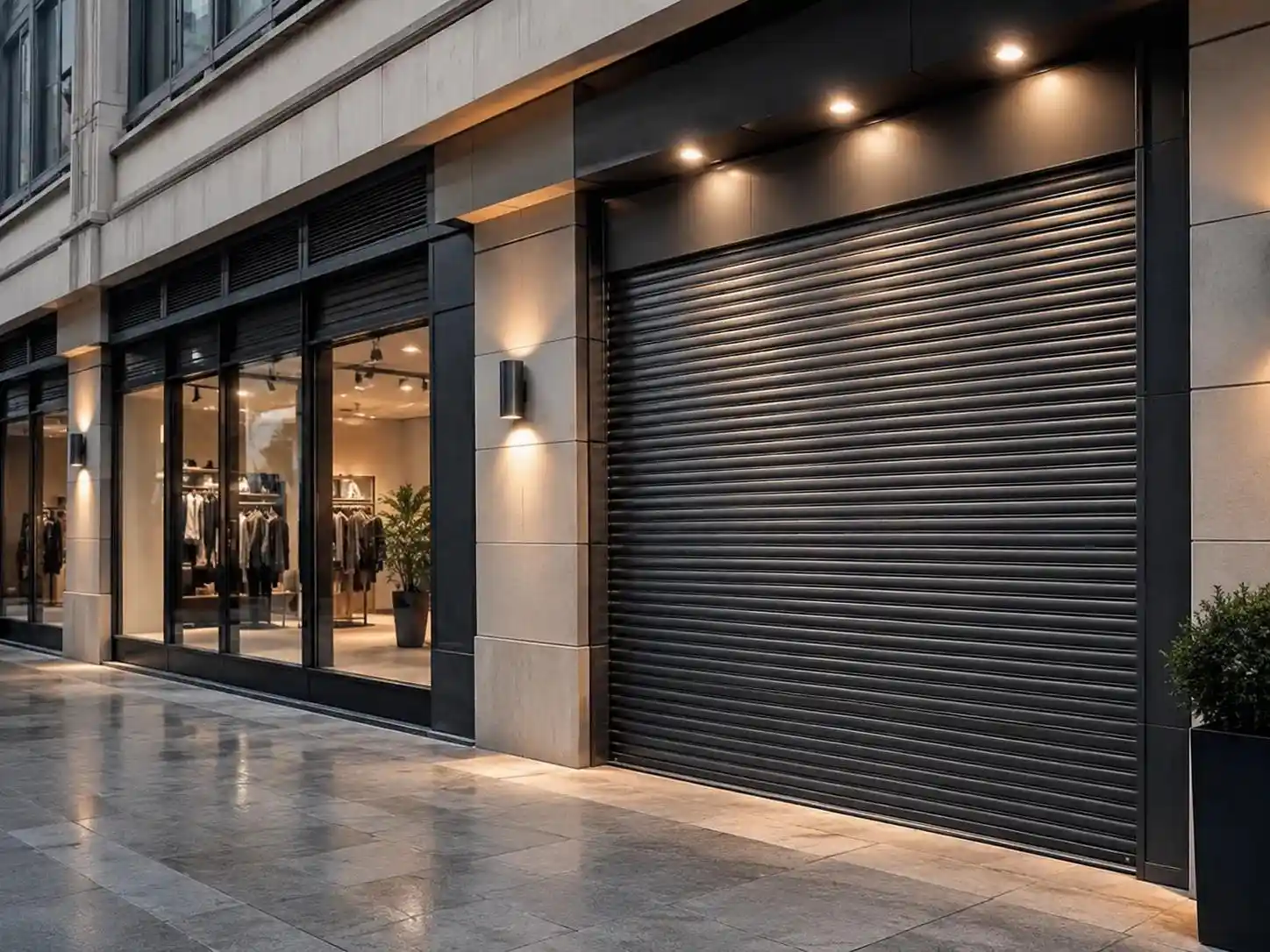
Aluminum Roller Shutters are commonly used in projects that require a combination of security, appearance, relatively low weight, and weather resistance, including:
- Commercial storefronts
- Retail shops
- Shopping centers
- Garages
- Warehouses
- Commercial buildings
- Light industrial facilities
- Logistics buildings
- Coastal buildings
However, the requirements are not the same for every project.
For example, a retail storefront may place greater emphasis on:
- Appearance
- RAL colors
- Perforated profiles
- Transparent-view profiles
- Security
A warehouse or industrial building may place greater emphasis on:
- Opening size
- Wind load
- Curtain weight
- Operating cycles
- Guide rail design
- Motor selection
Therefore, the selection process should not start with “Which roller shutter is the best?” It should start with:
What performance does this project actually require?
Why Aluminum Roller Shutter Design Cannot Be Evaluated by “Aluminum” Alone
“Aluminum” is a material description, not a complete product specification. Two roller shutter profiles made from aluminum alloy can perform differently because of differences in:
-
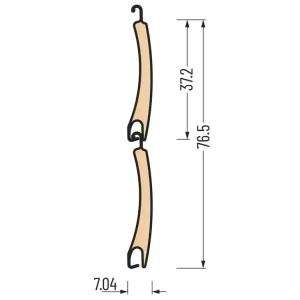
- Technical CAD diagram showing the interlocking mechanism and dimensions of curved aluminum roller shutter slats.
-
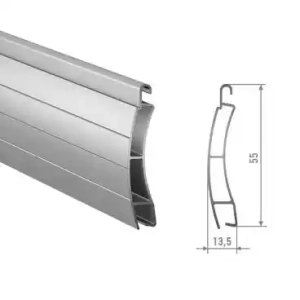
- 3D render and CAD cross-section drawing of a 55mm double-walled extruded aluminum roller shutter slat.
-
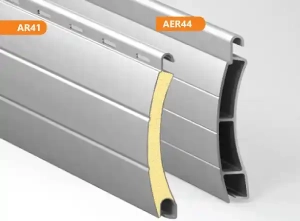
- Comparison between AR41 foam-filled insulated slat and AER44 double-walled hollow extruded aluminum roller shutter profile.
Alloy & Temper
Different alloys and tempers provide different combinations of mechanical properties, extrusion characteristics, and surface finishing performance. 6063-T5, for example, is commonly used for many architectural and industrial extrusion applications.
Profile Geometry
Internal cavities, reinforcement ribs, interlocking areas, and the overall cross-section all influence how the profile behaves in the finished curtain.
Wall Thickness
Wall thickness affects material consumption and contributes to structural performance, but increasing thickness alone is not always the most efficient engineering solution.
Interlocking Design
The way individual slats connect and move against each other affects curtain stability, movement, noise, and dimensional compatibility.
Surface Finish
Powder coating, anodizing, and other finishes affect appearance and can improve protection against environmental exposure when properly specified.
Guide Rails
Guide rails are part of the operating and structural system and should not be evaluated separately from the curtain.
Wind Load
Larger openings and exposed buildings require appropriate consideration of wind pressure and the complete shutter assembly.
Operating System
Manual and motorized systems have different requirements. Motor selection depends on the actual curtain weight, opening dimensions, shaft, operating cycles, friction, and other system parameters.
Therefore, simply asking:
“What aluminum alloy do you use?”
is usually not enough.
A more complete purchasing question would be:
What profile design, wall thickness, alloy, surface finish, and wind-load performance does the complete shutter system provide?
Main Advantages of Aluminum Roller Shutters
1. Lower Curtain Weight
Aluminum has a lower density than steel. Therefore, under comparable dimensions and structural requirements, Aluminum Roller Shutters can achieve a relatively low curtain weight.
A lower curtain weight may provide several practical benefits:
- Lower operating-system load
- Easier handling and installation
- Reduced load on supporting components
- More flexibility when matching the motor and shaft system
- Lower transportation weight
However, one point is often overlooked:
Lower weight does not automatically mean a better profile.
Excessive wall-thickness reduction may affect profile stiffness, interlocking stability, or the structural performance required for larger openings.
The engineering objective should therefore not be:
Make the profile as light as possible.
A more appropriate objective is:
Use only as much material as the application actually requires.
This is one of the main reasons why custom roller shutter profiles can provide value during product development.
-
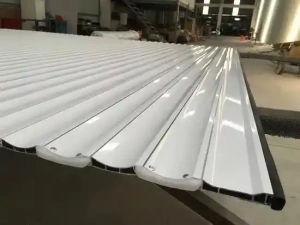
- Double-walled extruded aluminum slats with premium powder coating ensure high strength and weather resistance.
-
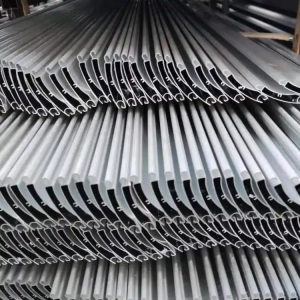
- Our factory maintains a massive production capacity for custom aluminum roller shutter profiles to ensure fast global delivery.
2. Good Corrosion Resistance
Aluminum naturally forms a thin oxide layer when exposed to air, giving aluminum alloys inherent corrosion resistance in many environments.
This makes Aluminum Roller Shutters suitable for many:
- High-humidity environments
- Commercial buildings
- Coastal applications
- Outdoor installations
However, another common misconception should be avoided:
Aluminum does not mean corrosion-proof.
Actual environmental performance also depends on:
- Alloy
- Surface preparation
- Powder coating
- Anodizing
- Coating thickness
- Installation environment
- Salt exposure
- UV exposure
For coastal projects in particular, buyers should not simply specify:
“Aluminum roller shutter for coastal use.”
A more useful specification is:
What surface finish and corrosion-resistance requirements are required for the project environment?
3. Flexible Surface Finishing Options
Commercial projects often have relatively high appearance requirements. Aluminum Roller Shutters can be supplied with different finishes depending on architectural requirements, including:
- Powder Coating
- Anodizing
- Architectural finishes
- Custom RAL colors
For example, commercial storefronts may use:
- Black
- White
- Dark gray
- Silver
- Custom RAL colors
Different profile designs can also serve different functional requirements.
Solid Profiles
Suitable for applications where greater visual coverage and privacy are required.
Perforated Profiles
Can provide a balance between security, ventilation, and visual display, depending on the profile design.
Transparent-View Profiles
Suitable for certain retail and commercial applications where product visibility is important even when the shutter is closed.
Aluminum vs Steel Shutters: What Should Buyers Actually Compare?
When comparing Aluminum vs Steel Shutters, one of the most common mistakes is to compare only material price.
A more useful approach is to compare the complete system and the actual project requirements.
| Evaluation Factor | Aluminum Roller Shutters | Steel Roller Shutters |
|---|---|---|
| Material Density | Lower | Higher |
| Curtain Weight | Typically lower for comparable designs | Typically higher for comparable designs |
| Motor Selection | Must be selected according to actual curtain weight and system load | Must also be selected according to actual system load |
| Corrosion Resistance | Aluminum has inherent corrosion resistance; finish and environment still matter | Typically requires appropriate corrosion-protection measures |
| Surface Finish | Powder Coating / Anodizing and other specified finishes | Coating and other specified finishes |
| Commercial Appearance | Wide range of colors and surface finishes | Also available with various surface finishes |
| Profile Customization | Well suited to extrusion-based customization | Depends on the specific manufacturing process |
| High-Impact Applications | Depends on the specific profile and system design | Some heavy-duty systems may be suitable for higher-impact requirements |
| Large Openings | Requires wind-load and structural evaluation | Also requires structural evaluation |
| Coastal Environments | Requires appropriate alloy, surface treatment, and environmental specification | Corrosion protection requires careful consideration |
| Thermal Performance | Insulated profiles can be used for applications requiring improved thermal performance | Insulated construction can also be used depending on the system |
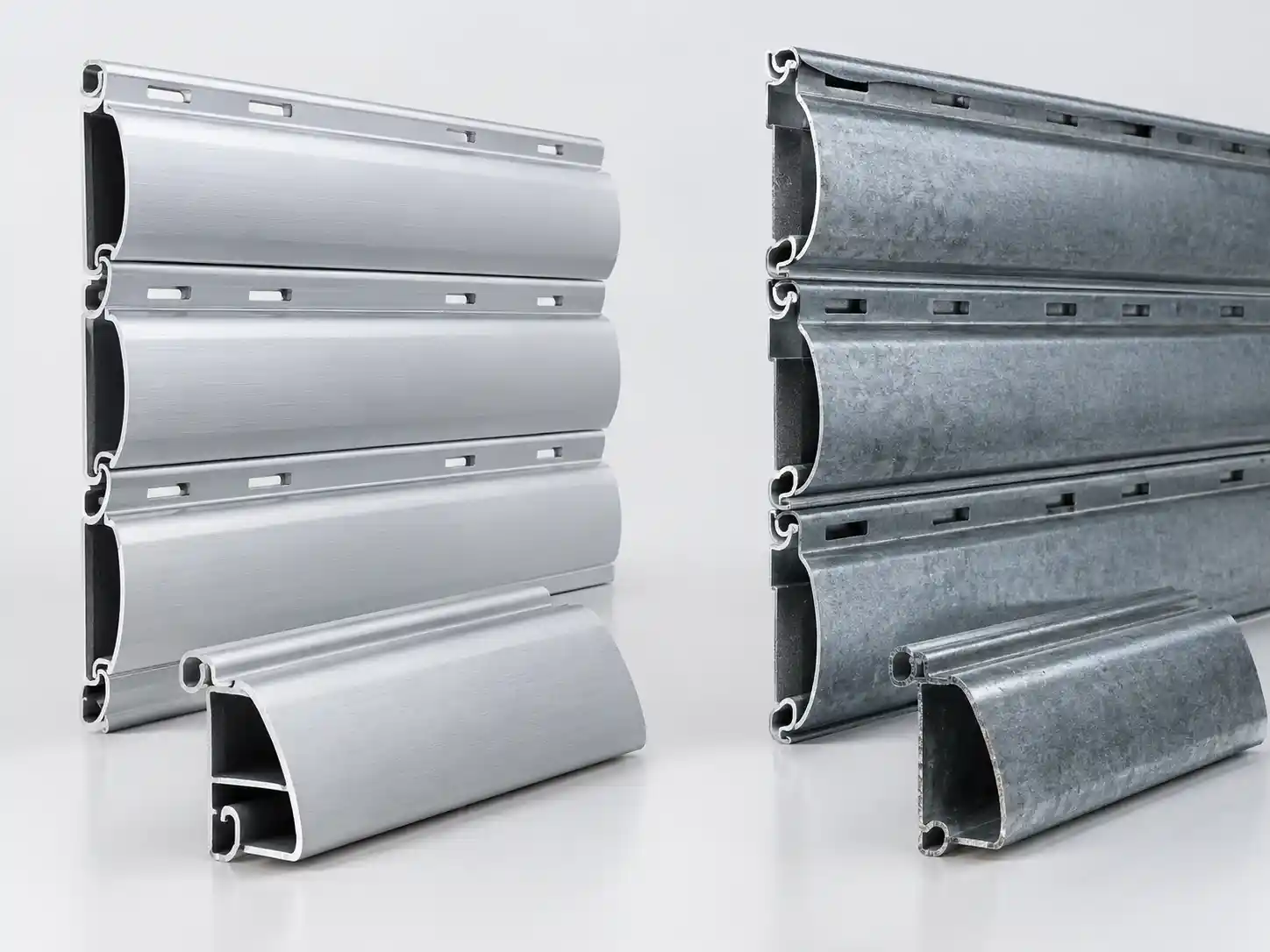
Compared to traditional galvanized steel (right), our extruded aluminum profiles (left) offer a superior strength-to-weight ratio and natural rust resistance.
There is no simple rule such as:
Aluminum always wins.
Nor is it accurate to assume:
Steel is always stronger.
The appropriate material and system depend on:
Security + Wind Load + Opening Size + Operating Cycles + Corrosion Exposure + Thermal Requirements
What Makes an Aluminum Roller Shutter Profile Worth Buying?
If you are a door manufacturer, roller shutter manufacturer, window and door fabricator, contractor, or importer, the aluminum roller shutter profile itself deserves careful evaluation.
1. Alloy and Temper
Buyers should request a specific alloy and temper instead of accepting a generic description such as:
“Aluminum.”
For example, 6063-T5 is commonly used in many architectural and industrial aluminum extrusion applications.
6063 alloy offers useful extrusion and surface-finishing characteristics, making it suitable for many architectural and industrial profile applications.
However:
6063-T5 alone does not prove the overall quality of a roller shutter profile.
Two suppliers may both use 6063-T5 while producing profiles with different:
- Profile geometry
- Wall thickness
- Extrusion quality
- Dimensional control
- Surface finish
- Heat-treatment condition
- Manufacturing processes
Therefore, alloy and temper should be treated as one part of the complete purchasing specification.
2. Profile Geometry Is More Important Than Simply Increasing Wall Thickness
This is one of the most overlooked aspects of Aluminum Roller Shutters.
A common buyer reaction is:
“If the profile is not strong enough, make the wall thicker.”
Engineering design is more complicated than that.
The following factors can all influence the structural behavior of an extrusion profile:
- Cross-section
- Internal cavity
- Reinforcement ribs
- Interlocking area
- Load path
A well-designed extrusion profile can place material where it contributes more effectively to the required structural performance instead of simply increasing the thickness of every wall.
This is one of the important advantages of aluminum extrusion compared with a simple flat-sheet structure.
3. Wall Thickness Is Not Always “The Thicker, The Better”
A thicker profile generally means:
- More aluminum consumption
- Higher weight
- Higher material cost
- Higher transportation weight
It can also affect:
- Extrusion difficulty
- Die design
- Production speed
- Overall cost efficiency
Therefore, for custom roller shutter profiles, the engineering objective should be:
Meet the required project performance without unnecessary material.
Maximum wall thickness should not automatically be treated as the engineering target.
4. Interlocking Design
A roller shutter curtain is normally assembled from multiple profiles that interlock with each other.
The interlocking geometry is therefore important for the behavior of the complete curtain.
Buyers should consider:
- Connection geometry
- Engagement depth
- Movement clearance
- Dimensional consistency
- Profile deformation
Poorly designed or poorly controlled interlocking areas may contribute to:
- Higher operating resistance
- Increased noise
- Binding or jamming
- Uneven curtain movement
Therefore, a roller shutter profile should not be evaluated only by looking at its cross-section. Buyers should also understand how the profile works within the actual curtain assembly.
5. Reinforcement Ribs
Profiles requiring greater stiffness may use internal reinforcement ribs to improve the efficiency of the cross-section.
The purpose of a reinforcement rib is not simply to “add thickness.” Proper design should consider:
- Load path
- Local stiffness
- Material distribution
- Extrusion feasibility
- Tooling complexity
If the reinforcement geometry becomes unnecessarily complicated, it may also increase extrusion-die complexity and production cost.
Good engineering therefore involves balancing:
Performance vs Weight vs Manufacturability vs Cost
How to Select the Right Aluminum Roller Shutters
Step 1: Determine the Opening Size
Start with the basic opening information:
- Width
- Height
- Clear opening
- Headroom
- Side space
Opening size can affect:
- Curtain weight
- Shaft size
- Motor selection
- Guide rail requirements
- Wind load
- Profile selection
Step 2: Determine the Installation Environment
Confirm where the roller shutter will be installed:
- Indoor
- Outdoor
- Coastal
- High humidity
- Industrial
- High UV exposure
- Desert climate
Different environments require different corrosion-protection and surface-finish considerations.
Step 3: Determine the Security Requirements
Depending on the application, buyers may need to define:
- Security requirements
- Impact resistance
- Anti-lift requirements
- Locking method
- Guide rail design
- Bottom rail requirements
For specialized applications such as jewelry stores, banks, warehouses, or other security-sensitive projects, it is better to specify the applicable security requirements or test standards rather than simply requesting a:
Heavy-duty aluminum shutter.
Step 4: Determine the Operating Cycles
How many times will the shutter open and close each day?
This parameter is often overlooked.
A garage may have relatively few cycles per day, while a retail entrance or logistics facility may operate much more frequently.
Useful information includes:
- Cycles per day
- Estimated annual cycles
- Operating speed
- Manual or motorized operation
These details can help suppliers evaluate the requirements for the motor, shaft, bearings, and other operating components.
Wind Load: A Critical Parameter for Large Aluminum Roller Shutters
For large openings and buildings exposed to strong winds, wind load is an important purchasing parameter.
Wind load is not determined by the profile alone. It can also depend on:
- Opening width
- Opening height
- Building height
- Local wind speed
- Exposure conditions
- Guide rails
- Fixing points
- Curtain construction
- Reinforcement
- Building structure
Therefore:
Do not judge the wind resistance of an Aluminum Roller Shutter simply by its aluminum profile thickness.
A more useful purchasing question is:
What is the design wind load of the complete shutter assembly?
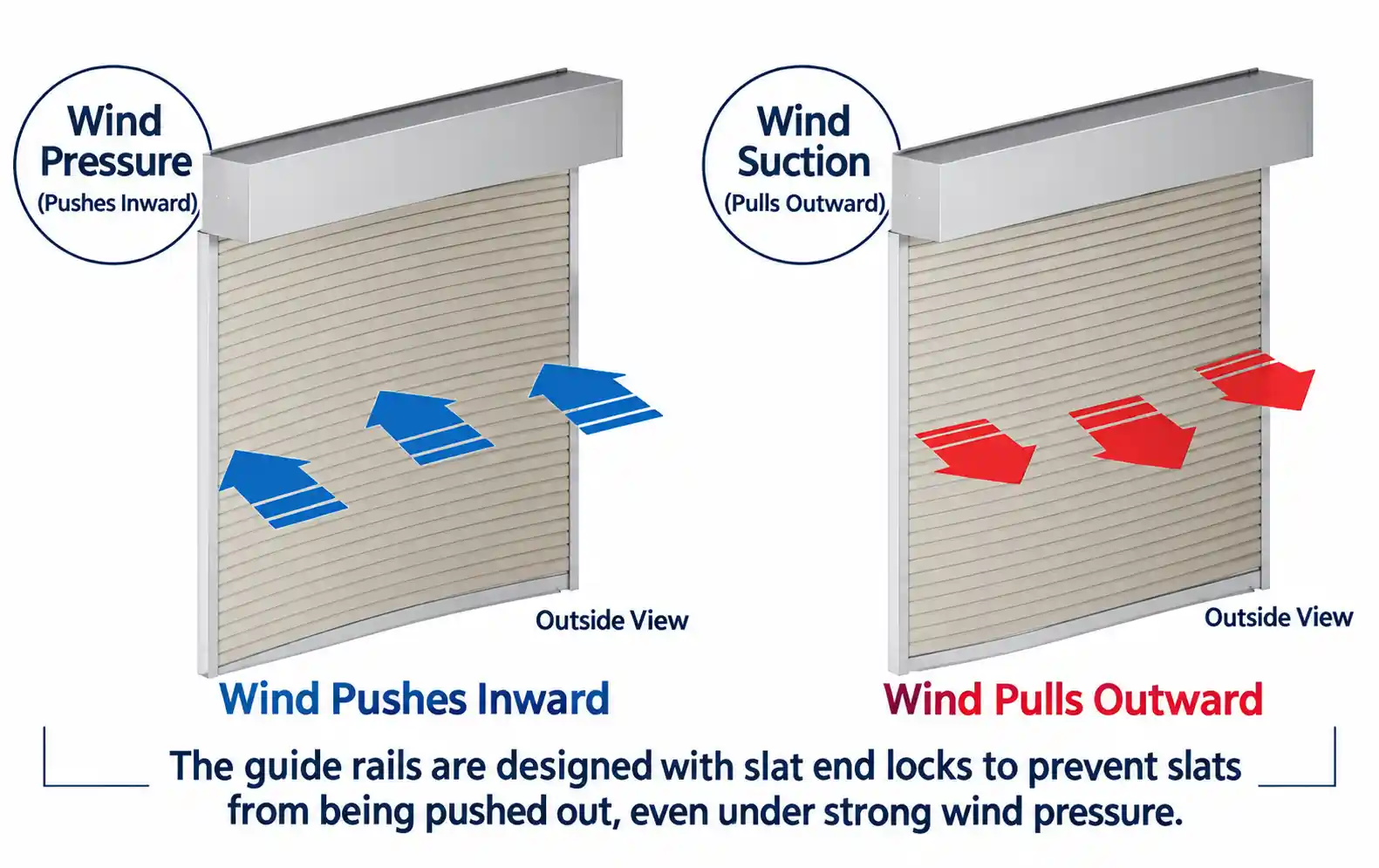
Equipped with specially designed guide rails and slat end locks, our roller shutters can safely withstand severe wind pressure and suction without blowing out.
Why “Profile Wind Resistance” Is Not the Complete Answer
A profile may have good stiffness, but the complete system can still perform differently if:
- The guide rails are insufficient
- Fixing points are inadequate
- The supporting structure is unsuitable
- The curtain connection is not properly matched
Therefore, wind-load performance should be evaluated across:
Curtain + Profile + Guide Rails + Fixings + Supporting Structure
Insulated Roller Shutters: Thermal Performance Is More Than Foam Filling
Projects requiring improved thermal performance may use insulated roller shutters.
Some products use polyurethane foam as an internal filling material to reduce heat transfer through the shutter curtain.
However, one important purchasing principle should be kept in mind:
Insulation material alone does not determine the thermal performance of the complete door.
Buyers should also consider:
- Profile design
- U-value
- Air leakage
- Side guides
- Head box
- Bottom seal
- Installation quality
- Opening frequency
For example, even if the shutter curtain itself provides good insulation, significant air leakage around the side guides or bottom seal can affect the overall thermal performance of the installed door.
For this reason, specific energy-saving claims should not be made without defined test conditions and project data.
A statement such as:
“Energy consumption will be reduced by 20%.”
should not be used as a general product claim without supporting evidence.
Coastal Areas: How Should You Specify Aluminum Roller Shutters?
One of the main challenges in coastal areas is:
Salt exposure
For coastal projects, buyers should confirm the following.
Aluminum Alloy
Specify the required alloy and temper instead of using a generic “aluminum” description.
Surface Finish
Confirm whether Powder Coating, Anodizing, or another specified finish is appropriate for the application.
Coating Specification
Define coating requirements rather than simply writing:
“Outdoor coating.”
Installation Environment
Consider the distance from the coastline, salt-spray exposure, local environmental conditions, and the actual installation location.
For highly corrosive environments, product suitability should not be determined simply by saying:
“Aluminum does not rust.”
Custom Roller Shutter Profiles: When Is Custom Extrusion Worth It?
If an existing standard profile already satisfies the required:
- Dimensions
- Weight
- Wind-load requirements
- Appearance
- Installation method
then using a standard profile may be more economical.
However, custom aluminum extrusion may be appropriate when the project requires:
- Special dimensions
- Special interlocking geometry
- Special guide-rail compatibility
- Specific wall thickness
- Special reinforcement structures
- Special appearance
- Specific insulation requirements
Basic Custom Aluminum Extrusion Process
-
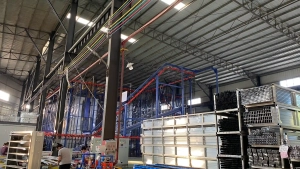
- Wide view of our advanced automated powder coating line and large-scale storage racks for extruded aluminum profiles.
-
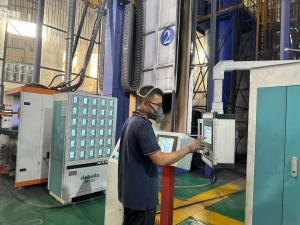
- A skilled technician in protective gear operating a CNC touchscreen control panel for automated aluminum surface treatment at the factory.
-
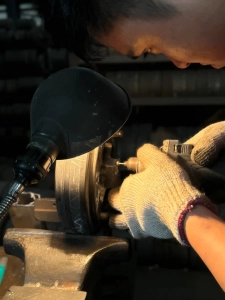
- Close-up of a skilled machinist carefully grinding and polishing a custom metal die component under a work lamp.
-
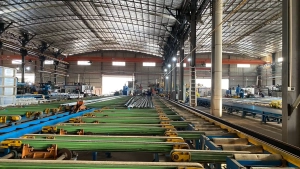
- Freshly extruded long aluminum profiles resting on the cooling bed of a heavy-duty extrusion press line in the manufacturing plant.
1. Drawing Review
Customers can provide:
- CAD drawings
- PDF drawings
- 2D drawings
- 3D models
- Existing samples
The engineering team can then review:
- Wall thickness
- Hollow sections
- Tolerances
- Corner geometry
- Extrusion feasibility
2. Profile Optimization
If the design contains:
- Large wall-thickness differences
- Unbalanced hollow sections
- Overly complex local geometry
- Unnecessary material
- Difficult machining areas
the design can be reviewed before tooling begins.
This stage is important because identifying extrusion-design issues before die production generally makes later design changes easier and less costly than modifying an already-produced die.
3. Custom Extrusion Die
Once the design is confirmed, a custom extrusion die can be developed.
Die design may need to consider:
- Profile complexity
- Wall thickness
- Hollow structure
- Material flow
- Surface quality
- Production stability
4. Prototype
Trial extrusion and prototype production can then be used to evaluate:
- Dimensions
- Weight
- Surface quality
- Interlocking fit
- Assembly
- Functional compatibility
5. Surface Finishing
Depending on the project requirements, available finishes may include:
- Anodizing
- Powder Coating
- Other specified finishes
6. CNC Machining
If further machining is required, processes may include:
- Cutting
- Drilling
- Milling
- Slotting
- Hole machining
7. Mass Production
After prototype approval, the project can move into batch or mass production.
For long-term B2B projects, ongoing control may include:
- Alloy consistency
- Profile dimensions
- Profile weight
- Surface quality
- Batch consistency
A Good Custom Profile Should Not Be Designed Simply to Be “Lighter”
This is an important point when communicating with an aluminum extrusion supplier.
Suppose the original profile has a relatively high weight. The first question may be:
“Can you reduce the wall thickness?”
A more useful engineering question is:
Where is the material actually needed?
If a specific area carries a significant portion of the load, reducing material in that area may negatively affect structural performance.
On the other hand, if material exists mainly because of an outdated design or unnecessary geometry, that area may provide an opportunity for optimization.
A more rational profile-optimization process is:
Identify Load → Understand Geometry → Remove Unnecessary Material → Verify Performance
rather than:
Make Everything Thinner
Aluminum Roller Shutter Purchasing Checklist
Before requesting quotations, buyers should prepare as much of the following information as possible:
| Parameter | Information to Provide |
|---|---|
| Application | Retail / Warehouse / Garage / Industrial |
| Opening Size | Width × Height |
| Alloy | For example, 6063-T5 |
| Profile Type | Single-wall / Double-wall / Insulated |
| Wall Thickness | Nominal wall thickness |
| Curtain Weight | kg/m² |
| Surface Finish | Powder Coating / Anodizing |
| Color | RAL / Custom |
| Wind Load | Required design pressure |
| Operation | Manual / Motorized |
| Operating Cycles | Cycles per day |
| Guide Rail | Standard / Reinforced |
| Insulation | Required / Not required |
| Quantity | Prototype / Batch / Mass production |
| Custom Extrusion | Standard / Custom |
| Drawing | CAD / PDF / Sample |
| Destination | Country / Port |
7 Common Mistakes When Purchasing Aluminum Roller Shutters
1. Comparing Only the Aluminum Price per Kilogram
A lower material price does not necessarily mean a lower total project cost.
Buyers should also consider:
- Tooling
- Surface finishing
- Machining
- Packaging
- Freight
- Rejection rate
- Assembly
- Long-term operating requirements
2. Assuming Thicker Profiles Are Always Better
The complete profile geometry should be evaluated rather than wall thickness alone.
3. Looking Only at the Alloy and Ignoring Profile Structure
Even when two products use the same 6063-T5 alloy and temper, their profile geometry, dimensions, manufacturing quality, and application performance may differ.
4. Asking Only About Profile Wind Resistance
Wind-load performance should be considered across:
Curtain + Guide Rails + Fixings + Supporting Structure
5. Assuming “Insulated” Automatically Means Energy Savings
Buyers should request information about:
- U-value
- Air leakage
- Sealing
- Installation conditions
6. Treating Powder Coating as Permanent Corrosion Protection
Surface treatment can improve weather and corrosion resistance, but actual performance depends on:
- Coating system
- Pretreatment
- Coating thickness
- Installation environment
7. Asking for the Lowest Price from the Beginning
For custom roller shutter profiles, buyers should compare:
Total Cost of Ownership
rather than only:
Price per kg
How to Evaluate the Manufacturing Capability of an Aluminum Roller Shutter Supplier
Importers, door manufacturers, roller shutter manufacturers, and contractors can evaluate a supplier through several practical areas.
1. Can the Supplier Provide Specific Material Specifications?
Avoid accepting only generic statements such as:
“High-quality aluminum.”
Instead, request:
- Alloy
- Temper
- Profile weight
- Dimensions
2. Can the Supplier Handle Custom Extrusion?
For custom profiles, confirm whether the supplier can support:
- Die development
- Extrusion production
- Prototype development
- Dimensional inspection
3. Can the Supplier Provide Surface Finishing?
Confirm available capabilities such as:
- Powder Coating
- Anodizing
- Color matching
- Surface inspection
4. Can the Supplier Handle Further Machining?
If the product requires:
- Cutting
- Drilling
- Milling
- CNC machining
it can be useful to confirm whether the supplier can provide these processes as part of the project.
5. Can the Supplier Provide Technical Documentation?
For long-term B2B projects, buyers may request documentation such as:
- Material certificates
- Inspection reports
- Dimensional reports
- Surface specifications
- Relevant test documentation
The specific documentation should be defined according to the project, applicable requirements, and contractual specifications.
Why Source Aluminum Roller Shutter Profiles from SH-Aluminum?
For B2B customers looking for aluminum roller shutter profiles, SH-Aluminum approaches the project from an aluminum extrusion manufacturing perspective and can support both standard and custom profile requirements.
Available manufacturing and processing services include:
- Aluminum Extrusion
- Custom Aluminum Profiles
- Custom Extrusion Dies
- CNC Machining
- Anodizing
- Powder Coating
- Prototype Development
- Mass Production
If a customer already has a finished profile drawing, production can be evaluated based on the supplied specifications.
If the project is still at the sample or concept stage, the initial evaluation can start with:
Sample + Dimensions + Application + Estimated Quantity
For custom roller shutter profiles, engineering considerations can include:
- Profile geometry
- Wall thickness
- Interlocking design
- Reinforcement
- Extrusion feasibility
- Surface finishing
- Production consistency
The objective is not simply to produce a profile that is thicker or heavier. The focus should be on matching the profile design to the actual application and manufacturing requirements.
Frequently Asked Questions
What alloy is commonly used for aluminum roller shutter profiles?
6063 series aluminum alloys, including 6063-T5, are widely used in many architectural and industrial extrusion applications.
However, the appropriate alloy and temper should be selected according to the profile design, mechanical requirements, surface-finish requirements, and final application.
Are Aluminum Roller Shutters suitable for coastal areas?
They can be suitable for many coastal applications, but the actual specification should take into account coastal exposure, alloy, surface treatment, coating requirements, and installation conditions.
For high-salt environments, corrosion-protection requirements should be defined during the purchasing stage.
Are aluminum roller shutters strong enough for commercial applications?
Aluminum roller shutters can be used in many commercial applications, but security and structural performance cannot be determined from the material name alone.
Actual performance depends on profile geometry, wall thickness, reinforcement, guide rails, locking systems, and the supporting installation structure.
Is 6063-T5 automatically better than other aluminum alloys?
No single alloy and temper should be considered universally better for every application.
Different alloys and tempers are selected for different performance requirements. For extrusion profiles, material selection should be evaluated together with:
Profile Design + Manufacturing Process + Application Requirements
Are thicker aluminum profiles always stronger?
Not necessarily.
Structural performance depends not only on wall thickness but also on cross-sectional geometry, internal cavities, reinforcement ribs, and load paths.
A well-designed profile can therefore provide an efficient balance between structural performance, weight, manufacturability, and cost.
Can Aluminum Roller Shutters be customized?
Yes. Special dimensions, interlocking structures, surface finishes, reinforcement features, or other project-specific requirements can be addressed through custom roller shutter profiles.
Depending on the project, customers can provide CAD drawings, PDF drawings, samples, or detailed dimensions for evaluation.
Can you supply aluminum roller shutter profiles only?
For B2B projects, the supply scope can be evaluated according to the customer’s requirements.
Customers that already have their own roller shutter assembly capabilities can focus the project on aluminum extrusion, surface finishing, CNC machining, and related profile-manufacturing processes.
What information should I send for an aluminum roller shutter quotation?
The following information is recommended:
- Profile drawing
- Existing sample
- Opening size
- Application
- Alloy requirement
- Surface finish
- Quantity
- Wind-load requirement
- Insulation requirement
- Destination market
If a complete CAD drawing is not available, you can start with product photos, dimensions, and the intended application.
Request a Custom Aluminum Roller Shutter Profile Evaluation
If you are developing a new Aluminum Roller Shutter or looking for a reliable aluminum roller shutter profiles supplier, you can provide SH-Aluminum with your CAD drawing, existing sample, dimensions, application requirements, or estimated purchasing quantity.
Our engineering team can review the project from:
Alloy → Profile Geometry → Wall Thickness → Extrusion → Surface Finish → CNC Machining
For projects without a complete drawing, the evaluation can also start with the product application and an existing sample.
Request a Quote → Submit Your Drawing or Sample
1. What alloy is commonly used for aluminum roller shutter profiles?
6063 series aluminum alloys, including 6063-T5, are widely used in many architectural and industrial extrusion applications. The appropriate alloy depends on profile design, mechanical requirements, and the final application.
2. Are Aluminum Roller Shutters suitable for coastal areas?
Yes, they can be suitable for coastal applications. However, the actual specification must account for salt exposure by selecting the proper alloy, surface treatment (like marine-grade powder coating), and installation conditions.
3. Are aluminum roller shutters strong enough for commercial applications?
Yes, aluminum roller shutters are widely used in commercial applications. Actual performance and security depend on profile geometry, wall thickness, reinforcement, guide rails, and locking systems rather than just the material name alone.
4. Is 6063-T5 automatically better than other aluminum alloys?
No single alloy is universally better for every application. Different alloys serve different performance requirements. For extrusion profiles, material selection must balance profile design, manufacturing processes, and application needs.
5. Are thicker aluminum profiles always stronger?
Not necessarily. Structural performance depends not only on wall thickness but also on cross-sectional geometry, internal cavities, and load paths. A well-designed profile provides an efficient balance between strength and weight.
6. Can Aluminum Roller Shutters be customized?
Yes. Special dimensions, interlocking structures, surface finishes, and reinforcement features can be addressed through custom roller shutter profiles based on your CAD drawings or existing samples.
7. Can you supply aluminum roller shutter profiles only?
Yes, for B2B projects, we can supply just the extruded profiles. Customers with their own assembly capabilities can focus entirely on our aluminum extrusion, CNC machining, and surface finishing services.
8. What information should I send for an aluminum roller shutter quotation?
It is recommended to provide a profile drawing or existing sample, opening size, intended application, alloy requirement, surface finish, estimated quantity, and your destination market.
9. What is the typical lead time for custom aluminum roller shutter profiles?
For new custom profiles, extrusion die development and prototyping typically take 10 to 15 days. Once the sample is approved, batch production usually takes 15 to 20 days depending on the order quantity and specific surface finish.
10. Do you provide surface finishing for aluminum roller shutter slats?
Yes, SH-Aluminum provides in-house surface finishing options including Powder Coating and Anodizing. We can match custom RAL colors to meet your specific architectural and commercial storefront requirements.