It is highly suitable. In Saudi Arabia’s high-temperature environment (50°C+) and harsh salt fog conditions, anodizing is the preferred solution for aluminum doors and windows. The inorganic ceramic coating it produces effectively prevents chalking and fading caused by UV rays, while providing exceptional resistance to wind, sand, and corrosion. For coastal cities like Jeddah and Dammam, it serves as a barrier against salt fog; for Riyadh and NEOM, it is the industry standard for achieving a luxurious metallic finish and long-lasting buildings.
Why Is Anodizing Ideal for Aluminum Doors and Windows in Saudi Arabia?
UV and Heat Resistance: After anodizing, a layer of inorganic aluminum oxide ceramic film forms on the surface of aluminum door and window frames. This film remains stable under Saudi Arabia’s intense UV radiation and high temperatures, unlike organic powder-coated finishes, which are prone to photo-oxidation, degradation, fading, and chalking.
Suitable for Salt Fog Environments: After sealing treatment, the surface of anodized aluminum doors and windows forms a barrier that effectively prevents chloride ions in salt fog from penetrating, particularly in high-salt-fog areas such as Jeddah and Dammam.
The oxidation layer and the aluminum substrate share the same coefficient of thermal expansion: Since their coefficients of thermal expansion are nearly identical, this prevents cracking caused by thermal expansion and contraction in Saudi Arabia’s climate, which is characterized by significant daily temperature fluctuations.
Resistance to Wind and Sand: Saudi Arabia frequently experiences sandstorms, particularly in desert cities like Riyadh. The anodized coating on doors and windows is extremely hard, maintaining surface integrity even when exposed to high-speed dust, without compromising aesthetics.
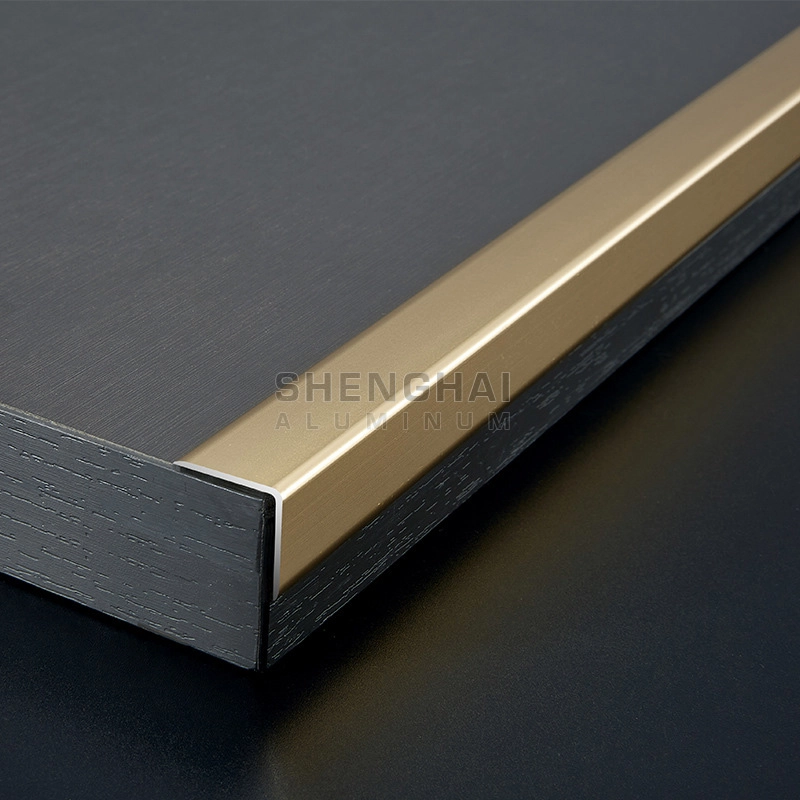
Luxurious metallic finishes: Subtle luxury and a sense of prestige are widely sought after by Saudis. Anodization preserves the natural texture and metallic luster of aluminum, and when paired with classic champagne and bronze tones, it creates a more intense sense of luxury.
What types of aluminum doors and windows are available in Saudi Arabia?
- Sliding doors, sliding windows, lift-and-slide doors
- Casement doors, casement windows
- Folding doors, folding windows
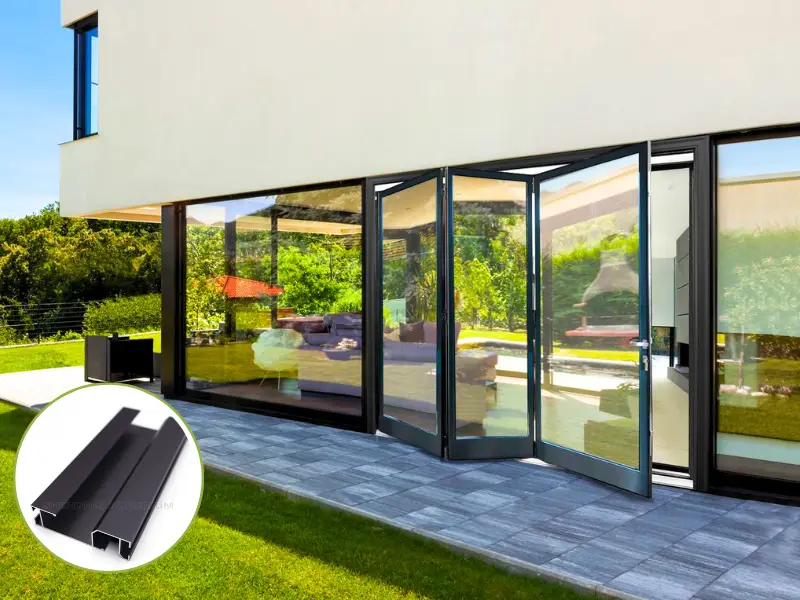
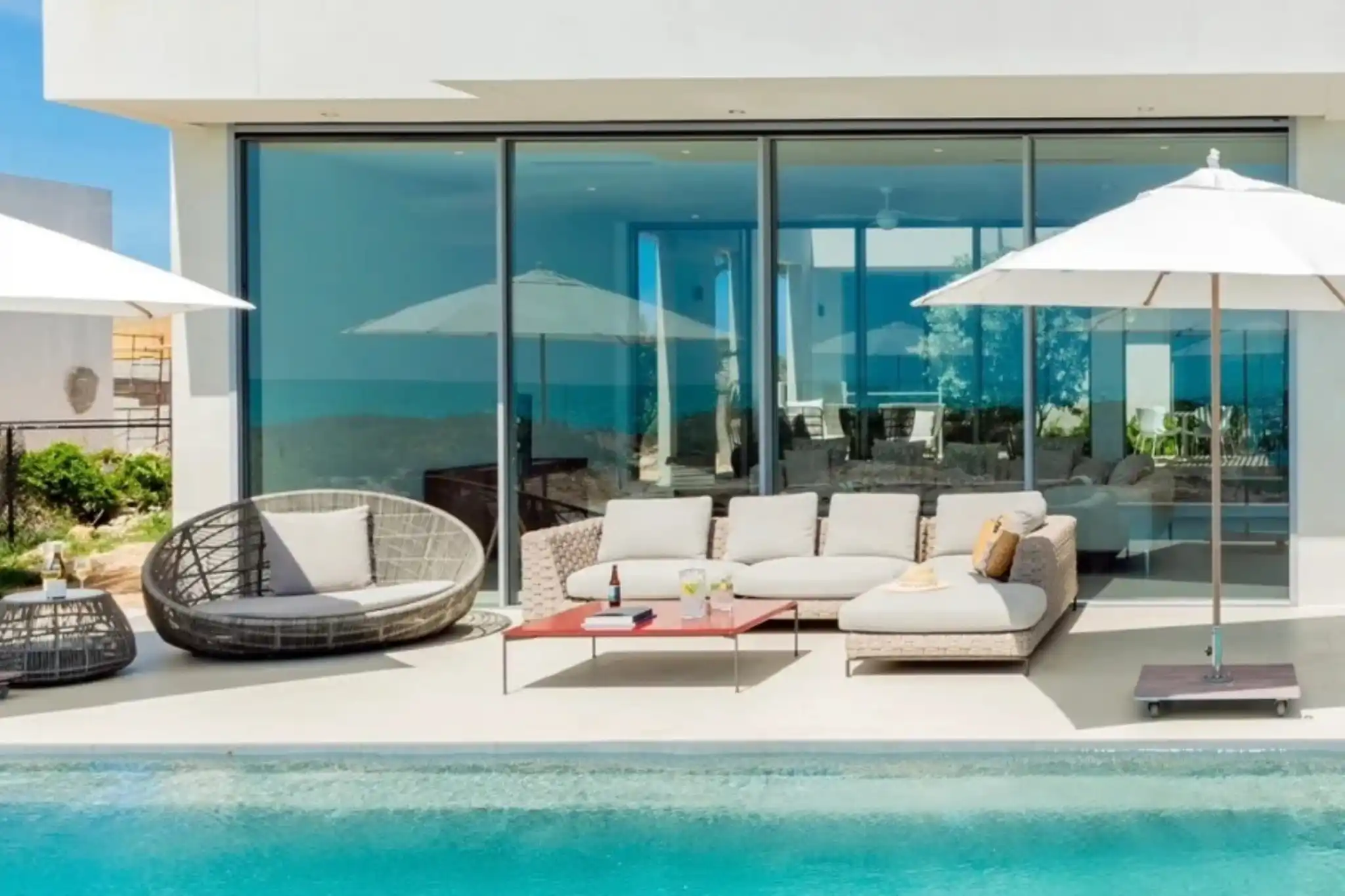
Luxury panoramic folding doors featuring matte black anodized finish and thermal break insulation, ideal for high-end residential projects in Riyadh.
What are the features of aluminum doors in Saudi Arabia?
Thermal break insulation, excellent sealing performance, resistance to wind and sand, UV and high temperatures, large dimensions with wide views, and a preference for visually luxurious and high-end colors such as champagne and bronze.
What surface treatments are typically used for aluminum doors and windows in Saudi Arabia?
Powder coating: Preferred by our SH-EXTRUSION clients in Saudi Arabia due to its cost-effectiveness, wide range of colors, and short production cycle. They typically favor colors that reflect UV rays, such as light shades like white and off-white. The powder selected must be ultra-weather-resistant to prevent surface degradation and fading.
Anodizing: This is a secondary choice for Saudi clients. It is selected primarily for its excellent resistance to salt spray and UV radiation, particularly in Red Sea and Persian Gulf coastal cities such as Jeddah and Dammam.
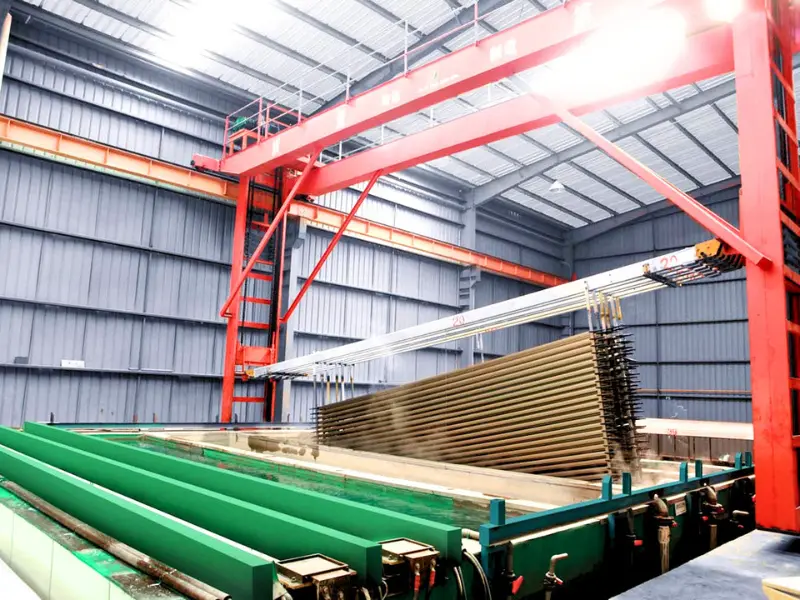
Our advanced anodizing line ensures consistent AA25 coating thickness for aluminum profiles, meeting the rigorous standards of KSA construction projects.
Wood Grain Transfer: This finish offers a warm, natural aesthetic. It is suitable for aluminum doors and windows in high-end settings such as villas and hotels.
In which Saudi cities are anodized aluminum doors and windows suitable?
Jeddah and Yanbu
Located on the Red Sea coast, these cities experience extremely high humidity and salt fog, accompanied by intense UV radiation year-round. The anodized coating on the surface of aluminum doors and windows can resist the penetration of chloride ions from salt fog and withstand UV radiation, thereby protecting the interior of the doors and windows from damage.
Cities along the Persian Gulf coast (Dammam, Khobar, Jubail)
These cities have extremely high seawater salinity, and the combination of industrial pollution and salt fog exerts a strong chemical corrosive force on the metal surfaces of aluminum doors and windows. We recommend using anodizing to resist these hazards.
Riyadh
Aluminum doors and windows in Riyadh are also suitable for anodizing. Although Riyadh is located deep inland and poses no risk of salt spray, it is the core of the high-end anodizing market. Local temperatures can reach 50°C+ and are accompanied by intense UV radiation, making the protective film formed by anodizing essential for withstanding the region’s environment. Additionally, Riyadh is home to numerous government buildings, financial centers (such as KAFD), and royal villas. The “authentic metallic finish” provided by anodizing (such as matte black and champagne) aligns with the city’s pursuit of an international, modern aesthetic.
City of the Future: NEOM
As a flagship project of Saudi Arabia’s Vision 2030, NEOM is primarily located along the Red Sea coast in the northwest. The region prioritizes sustainability and the long lifecycle of buildings. Anodizing offers exceptional recyclability and maintenance-free properties, fully aligning with NEOM’s green building assessment standards.