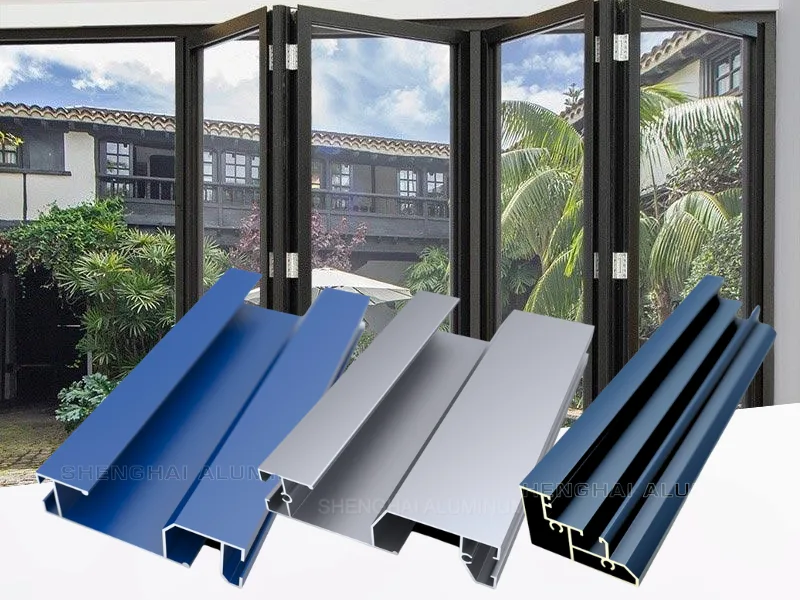

Aluminum doors are commonly used in homes and businesses today. While they have both advantages and disadvantages, this doesn’t prevent them from becoming one of the most popular metal doors. Below is a detailed introduction to the advantages and disadvantages of aluminum doors.
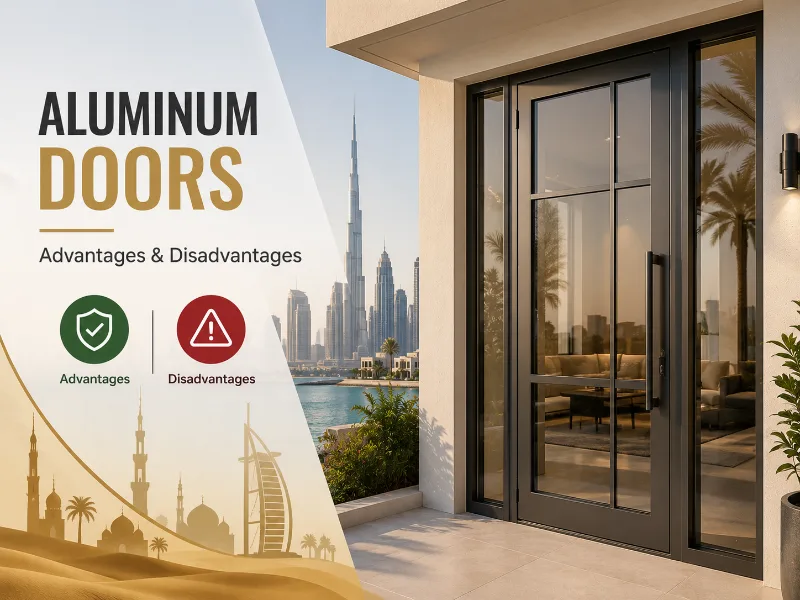
Explore the main advantages and disadvantages of aluminum doors for villas, residential homes, and commercial projects across Saudi Arabia, UAE, Bahrain, Qatar, Kuwait, and Oman.
Advantages of Aluminum Doors
High Hardness:
The door frame of an aluminum door uses aluminum profiles, which are aluminum alloys with added metallic elements such as Mg、Si、Cu, significantly increasing their hardness. Furthermore, the frame of an aluminum door typically features a thermal break design, and the internal multi-cavity design also significantly improves the door’s resistance to deformation.
Corrosion Resistance:
1.Natural Oxide Film: The surface of the aluminum profile easily reacts chemically with oxygen to form a thin, dense oxide film. This consumes a small portion of the surface material of the aluminum profile, but in return, it results in a more stable surface aluminum oxide. This aluminum oxide prevents the aluminum profile within the film from reacting with air and water, avoiding further consumption of aluminum material. This oxide film can last for a long time, maintaining basic corrosion resistance.
2.Surface Treatment: Anodizing significantly thickens the aluminum oxide film, making it hundreds of times thicker than natural oxide films, dramatically improving the corrosion resistance of aluminum door frames. Powder coating also enhances corrosion resistance; the high-temperature cured coating prevents aluminum from reacting with air and water in the environment.
Environmentally Friendly:
Aluminum door frames are made from extruded aluminum, and its recyclability is a major advantage. Other materials, such as wood and PVC, have very low recyclability and are often discarded due to aging. For the sake of global low-carbon goals, using environmentally friendly aluminum profiles is essential.
Lightweight and Safe:
Unlike other metals, aluminum profiles are very lightweight, thus saving labor and time costs during transportation and installation. Although aluminum door frames are relatively lightweight, they are also very resistant to pressure and impact, providing effective security even in commercial properties, protecting personal safety and property.
Aesthetically Pleasing:
Aluminum doors are often used in conjunction with glass. Surface treatments allow for a variety of selectable colors and textures on the frame surface. The transparency of the glass enhances interior brightness, creating a visually elegant and beautiful appearance.
Easy to Maintain and Clean:
The surface treatment of aluminum profiles makes the surface of aluminum door frames smooth, with dust-resistant and oil-repellent properties. Even in kitchens and bathrooms, cleaning and maintenance are easy.Usually, just wiping is sufficient to keep the surface clean.
Transparency:
Aluminum doors are generally designed with glass. The transparency of glass allows for good indoor lighting, ensuring sufficient light even when the door is closed during the day, reducing electricity costs. Aluminum-glass doors are especially suitable for balconies.
Fire Resistance:
Good aluminum-glass doors use aluminum profile frames and glass, both of which can withstand high temperatures. Even in the event of a fire, they can prevent the spread of fire, protecting people and property.

Disadvantages of Aluminum Doors
High Price:
Aluminum doors are generally more expensive than doors made of other materials. Good aluminum doors typically feature a thermal break design; the complex cavity structure and filling materials increase the complexity of the aluminum door frame production process, thus raising the price. Multi-layered glass also increases the price compared to other materials. Although the initial purchase price is high, the lower maintenance costs offset this high price.
Interior door frames are prone to condensation:
Aluminum door frames are susceptible to condensation under large temperature differences, increasing indoor humidity and promoting mold growth. Therefore, a thermally broken aluminum frame design is necessary to reduce this phenomenon.
Installation is more complex:
Aluminum doors typically require high installation precision, demanding experienced installers to prevent leaks, air leaks, loosening, deformation, and condensation on the inner glass.
Main types of aluminum doors
Compared to other door materials such as wood, metal, and plastic, aluminum profiles offer significant advantages in durability, aesthetics, environmental friendliness, functionality, and corrosion resistance. As of 2025, aluminum doors still hold a major market share. Below are some commonly used door types:
Aluminum folding doors: Including aluminum folding doors and aluminum double-folding doors, they occupy the least space and are one of the most popular door types.
Aluminum sliding doors: The sliding design is relatively effortless, and the price is lower than other aluminum doors.
Aluminum swing door:Offer good sealing and durability.
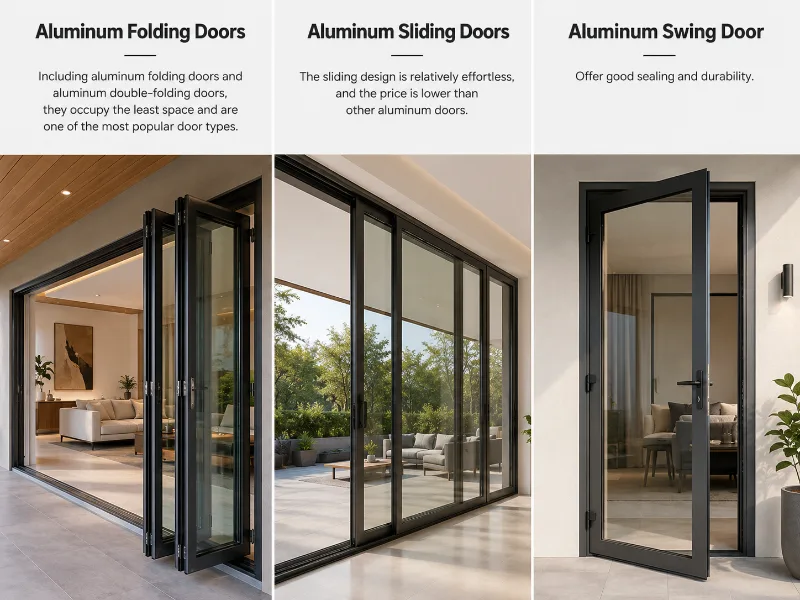
The three most popular aluminum door types: folding doors, sliding doors, and swing doors. Each offers unique advantages in space utilization, accessibility, and performance.
Aluminum Doors vs. Wood, Steel & uPVC Doors
Choosing the right door material can significantly impact durability, maintenance costs, energy efficiency, and long-term value. The comparison below highlights the key differences between aluminum, wood, steel, and uPVC doors to help you make an informed decision.
| Feature | Aluminum Doors | Wooden Doors | Steel Doors | uPVC Doors |
|---|---|---|---|---|
| Weight | Lightweight Yet Strong | Moderate | Heavy | Lightweight |
| Corrosion Resistance | Excellent – Naturally Rust-Free | Prone to Moisture, Rot & Termites | May Rust if Protective Coating Is Damaged | Good Moisture Resistance |
| Service Life | 30+ Years | 10–20 Years | 20–30 Years | 15–25 Years |
| Maintenance | Minimal Maintenance Required | Requires Painting & Sealing | Periodic Rust Protection Needed | Low Maintenance |
| Thermal Insulation | Good with Thermal Break Technology | Excellent Natural Insulation | Moderate | Good |
| Design Flexibility | Wide Range of Colors & Modern Styles | Premium Traditional Appearance | Limited Design Options | Limited Compared with Aluminum |
| Security & Strength | High Strength-to-Weight Ratio | Moderate | Highest Structural Strength | Moderate |
| Initial Cost | Medium to High | High | Medium | Most Affordable |
| Sustainability | 100% Recyclable | Renewable Resource | Recyclable | Limited Recyclability |
| Best Applications | Homes, Villas, Commercial Buildings & Coastal Projects | Luxury Homes & Traditional Interiors | Industrial Buildings & High-Security Entrances | Budget Residential Projects |
Quick Summary
- Aluminum Doors: Ideal for homeowners and businesses seeking durability, modern aesthetics, corrosion resistance, and low maintenance.
- Wooden Doors: Best suited for projects where natural beauty and traditional character are the primary priorities.
- Steel Doors: Recommended when maximum security and impact resistance are required.
- uPVC Doors: A cost-effective solution for budget-conscious residential projects.
Recommended for Gulf Climate Conditions
For hot climates such as Saudi Arabia, Bahrain, the UAE, and other Gulf countries, thermally broken aluminum doors are often preferred because they combine excellent durability with improved energy efficiency and resistance to harsh weather conditions.
Frequently Asked Questions About Aluminum Doors in Saudi Arabia, UAE, Bahrain & Other Gulf Countries
Choosing the right aluminum door for projects in Saudi Arabia, the UAE, Bahrain, Qatar, Kuwait, and Oman requires consideration of climate, durability, energy efficiency, and long-term performance. Below are answers to some of the most common questions asked by architects, contractors, developers, and homeowners throughout the Gulf region.
Are aluminum doors suitable for Saudi Arabia's extreme heat?
Yes. Saudi Arabia regularly experiences summer temperatures above 45°C. Thermally broken aluminum doors help reduce heat transfer, improve indoor comfort, and lower cooling costs, making them a preferred choice for villas, commercial buildings, and residential developments throughout the Kingdom.
Why are aluminum doors popular in the UAE?
The UAE's climate combines intense sunlight, high temperatures, humidity, and airborne dust. Aluminum doors are highly resistant to UV exposure, corrosion, and warping, making them well suited for Dubai, Abu Dhabi, Sharjah, and other rapidly developing cities.
Do aluminum doors perform well in Bahrain's coastal environment?
Yes. Bahrain's coastal climate exposes building materials to high humidity and salt-laden air. Powder-coated or anodized aluminum doors provide excellent corrosion resistance and maintain their appearance for many years, even in beachfront villas and commercial properties.
What type of aluminum door is best for Qatar?
For Qatar's hot desert climate, thermal break aluminum doors combined with double-glazed or Low-E glass are often recommended. This combination helps reduce solar heat gain and improves energy efficiency throughout the year.
Are aluminum doors suitable for Kuwait's harsh summers?
Absolutely. Kuwait experiences prolonged periods of extreme heat and strong UV radiation. High-quality aluminum doors with thermal insulation systems and weather-resistant finishes can withstand these demanding conditions while maintaining long-term performance.
Can aluminum doors withstand sandstorms in the UAE and Saudi Arabia?
Yes. Premium aluminum doors equipped with EPDM weather seals, multi-point locking systems, and precision-engineered frames can effectively reduce dust infiltration and provide enhanced protection against sandstorms common throughout the Gulf region.
Why do luxury villas in the Gulf region prefer aluminum doors?
Luxury villa owners across Saudi Arabia, the UAE, Bahrain, Qatar, and Oman often choose aluminum doors because they offer slim modern profiles, large glass openings, excellent durability, and minimal maintenance requirements.
Which is better for GCC projects: aluminum or uPVC doors?
For most GCC commercial projects, hotels, and luxury villas, aluminum doors are generally preferred. They provide superior structural strength, longer service life, and better resistance to extreme temperatures compared with uPVC alternatives.
How long do aluminum doors last in Gulf countries?
With proper surface treatment, quality hardware, and routine maintenance, aluminum doors can typically last 20–30 years or more in Saudi Arabia, Bahrain, Qatar, Kuwait, Oman, and the UAE.
What surface finish is best for aluminum doors in the Middle East?
Powder coating and anodizing are the most popular finishes. For coastal regions such as Bahrain, Dubai, and Muscat, high-performance powder coating or marine-grade anodizing offers enhanced protection against humidity, salt exposure, and UV degradation.
Are thermal break aluminum doors worth the investment in the Gulf region?
Yes. Although thermal break aluminum doors have a higher initial cost than standard systems, they significantly improve energy efficiency, reduce heat transfer, and lower long-term cooling expenses.
What are the best applications for aluminum doors in the Middle East?
Aluminum doors are widely used in luxury villas, coastal residences, hotels, commercial towers, office buildings, shopping centers, and residential compounds throughout Saudi Arabia, the UAE, Bahrain, Qatar, Kuwait, and Oman.
Aluminum Door Supplier
Shenghai Aluminum is a professional aluminium door manufacturer based in Foshan, China, specializing in high-durability, one-stop customization services. With over 16 years of expertise, we engineer our profiles to meet specific regional needs, including specialized heat-resistant solutions for aluminium door Kuwait projects, as well as reliable systems for global markets. We guarantee high-precision materials and surface treatments with a 15-day delivery cycle to keep your projects on schedule.